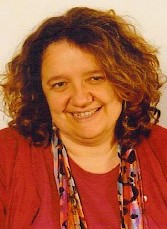
Worship Ecumenical Centre, Monday 1 March 2010
This week the Ecumenical Prayer Cycle invites us to pray for the countries of Andorra, Austria, Liechtenstein, Monaco, San Marino, Switzerland, and for the churches in these countries
This order of service was put together by Rudolf Renfer LWF director of Human resources
Welcome – Invocation
God of the past
Who has fathered and mothered us
We are here to thank you.
God of the future
Who is always ahead of us
We are here to trust you.
God of the present
Here in the midst of us
We are here to praise you.
God of life
Beyond us, within us
We rejoice in your glorious love.
Glory to the Father and to the Son and to the Holy Spirit,
As it was in the beginning is now and shall be for ever.
Amen
Hymn: In Dir ist Freude (stand)
Verse 1 in German, Verse 2 in French, Verse 3 in Italian
Prayer of Repentance and Forgiveness
Spirit of joy, through you, Christ lives in us, and we in Christ.
Forgive us when we forget you and when we fail to live in your joy.
Spirit of God, forgive us, and lead us to life in you.
Esprit d’amour, tu nous lies par amour, à toi-même et à ceux et celles qui nous entourent,
dans les liens de famille, la communauté des amis et à nos places de travail.
Pardonne quand nous faisons tort à ceux et celles que nous aimons
et nous détournons de l’amour de nos amis.
Esprit de Dieu, pardonne-nous et conduis-nous à vivre en toi.
Geist des Leibes Christi, verbinde uns in einer Kirche
durch deine lebensspendende Gnade und Hoffnung.
Vergib uns unser Stückwerk beim Aufbau deiner Kirche
und unser Versagen, deine Liebe in die Welt hineinzutragen.
Geist Gottes, vergib uns und führe uns zum Leben in dir.
As the dove gently settles on the tree, receive the gift of peace.
As the flame rises free with light and warmth, receive the gift of life.
As the wind moves and dances around the earth, receive the gracious gift of the Spirit
Amen
(In Spirit and in Truth, Worship Book WCC Assembly Canberra 1991)
Hymn sung by the Focolare Community
Bible Readings
Psalm 140 - Read in Romansch
Deliver me, O Lord, from evildoers; protect me from those who are violent.
who plan evil things in their minds and stir up wars continually.
They make their tongue sharp as a snake’s, and under their lips is the venom of vipers.
Guard me, O Lord, from the hands of the wicked;
protect me from the violent who have planned my downfall.
The arrogant have hidden a trap for me, and with cords they have spread a net,
along the road they have set snares for me.
I say to the Lord, “You are my God; give ear, O Lord, to voice of my supplications.”
O Lord, my Lord, my strong deliverer, you have covered my head in the day of battle.
Do not grant, O Lord, the desires of the wicked; do not further their evil plot.
Those who surround me lift up their heads; let the mischief of their lips overwhelm them!
Let burning coals fall on them! Let them be flung into pits, no more to rise!
Do not the slanderer be established in the land; let evil speedily hunt down the violent!
I know that the Lord maintains the cause of the needy, and executes justice for the poor.
Surely the righteous shall give thanks to your name; the upright shall live in your presence.
Luke 13, 4 - 5
“Those eighteen who were killed when the tower of Siloam fell on them – do you think that they were worse offenders than all the others living in Jerusalem? No, I tell you; but unless you repent, you will all perish just as they did.”
Sermon: Risk, chance, crisis ... Rudolf Renfer
Hymn sung by the Focolare Community
Prayer of intercession
Lord, our God,
We thank you that any crisis is not only a risk, but also a chance.
We thank you that human disasters are not a fatality and that its consequences have nothing to do with punishment or disobedience.
We thank you to show us how and where we can repent, how and where we can assume our responsibilities and struggle for the justice of the poor.
We pray today for Andorra, Austria, Liechtenstein, Monaco, San Marino and Switzerland, privileged small countries in Europe. We pray that their high standard of living will allow them to be examples of justice and good behavior among the nations of the world. We pray for the churches in these countries who live with a tradition of many centuries of Christian faith and service.
We pray for the ecumenical movement and for all organizations in this house. Give them the wisdom to assume the risks and to grasp the chances, in order to see any crisis as an opportunity for improving their witness and presence among the churches in the societies all over the world.
And we pray with the words of Nikolaus von Flüe, a Swiss monk of the 15th century:
You, my Lord and my God,
Give me all that leads me to you.
You, my Lord and my God,
Take away from me, all that separates me from you.
You, my Lord and my God,
Take me away from myself and offer me entirely to you.
The Lord’s prayer (said by each in our own language)
Hymn “Nada te turbe” (stand)
Verse 1 in Spanish, 2 in German, 3 in Italian
Blessing
O Lord, you have mercy on all,
take away from us our sins,
and mercifully set us ablaze
with the fire of your Holy Spirit.
Take away from us the heart of stone,
and give us a human heart, a heart to love and adore you,
a heart to delight in you,
to follow and enjoy you,
for Christ’s sake.
Hymn sung by the Focolare Community
lundi 1 mars 2010
An order of service as the Ecumenical Prayer cycle turns to Switzerland, Austria, San Marino, Liechtenstein, Monaco and Andorra ...
Publié par Jane à 08:40 0 commentaires
Libellés : ecumenical prayer cycle, Liturgy, Switzerland
Chance and risk - a sermon by Rudolf Rennfer
Chance and Risk - a sermon by Rev. Rudolf Renfer director of Human Resources at the Lutheran World Federation
This sermon was preached on 1 March 2010, the gospel text was the tower of Siloam falling down and killing 18 people. You can find the full liturgy here. A choir of 75 members of the Focolari movement also joined us for the service.
Perhaps "opportunity and risk" or opportunity and danger may work better for you that "chance and risk" but I think the meaning is clear.
It seems that in Chinese you use quite often two ideograms which separately mean one thing,
and together something else, but in relation with the two previous ones.
The ideograms on this worship sheet mean (above) “risk” and below “chance”. Together,
they express the concept of “crisis”.
In this context, I want to tell you an old story from China that I heard some time ago.
On the country side of rural China, a father offers a horse to his son who just got of age.
So the men from the village come to see the father and tell him:
“What a chance he has, your son, with such a wonderful horse.”
And the father answers:
“Maybe it is a good chance, maybe it is high risk.”
Some weeks later, the son comes back to the village with his horse, together with a wild horse that he was able to capture, a rare event.
So the men from the village come to see again the father and comment:
“What a chance for your son to capture such a wonderful wild animal.”
And the father replies: “Maybe it is a good chance, maybe it is a high risk.”
Some weeks later, when trying to tame the wild horse, the son falls down from his own horse
and breaks his leg, which is a tragedy in an isolated Chinese village.
So the men from the village come to see again the father and they complain:
“What a bad luck for your son, will he recover with his broken leg?”
And the old peasant answers:
“Maybe it is a high risk and bad luck, maybe it is a good chance.”
Some weeks later, a group from the army enters into the village and takes away all the young
men who can serve to fight on the battlefields. But one young man remains in the village; the
one with his broken leg.
So the men from the village come back to the peasant and comment again:
“What a chance he had your son not to be taken by the army.”
And the father says again:
“Maybe it is a good chance, maybe it is a high risk.”
As I said before: “Chance” and “risk” together in Chinese mean “crisis”. In fact, every
decisive moment in any life is a moment of crisis.
Every crisis has a chance and contains a risk.
We are praying this week, amongst other countries, for Switzerland. During decades, Switzerland has been seen as a blessed country, almost like a kind of biblical place where milk and honey flows. Everything works well, there is such a high standard of living, people are so friendly, and they make such wonderful chocolate and watches and cuckoo clocks and other clichés. But for several years, this image is vanishing, and the country is in the middle of a crisis, I would say mainly an identity crisis.
Look at the Swiss banking system and all these things that have happened behind the scenes
for many years in order to increase gains and profits, without respecting ethical principles, and these were all so friendly and nice Swiss people who did it.
Look at these dirty negotiations about secret bank accounts and names of French, American and German bank clients in Switzerland, and Swiss banks encouraging them to tax evasion.
Look at this incredible saga of two Swiss citizens detained as hostages in Libya, and the Swiss government who has lost any capacity of negotiation, leading finally the president of Libya to his stupid declaration of a jihad, due to the vote refusing the construction of minarets, where Switzerland has lost most of its credibility, and where some very unfriendly and narrow minded anti-islamic ideas become the majority view.
This is a crisis.
Look also at the ecumenical movement, at the organizations where we are working. Of course, there were always attacks from outside and from inside against the WCC and some of its positions, declarations and statements. But in general, it was a respected movement and
supported by the member churches. And now it seems that there is no more trust, that the churches and their agencies don’t see anymore a deep sense of what we are doing in this
house, and there is pressure on funding, on programmes, on staff. And even if we maintain the
hope that declaring this as a winter time where we can do a lot of things inside the house, and
that it is a good occasion for reorientation, we need to know that spring will be coming one day and that we have to get out of the impression of being in the middle of a crisis.
Or look at ourselves, at our own lives, at our chances and risks. Look at the moments we have
been going through or we are now confronted with, in our families, with our friends, at our workplace, with our neighbors, and we realize that life is full of crisis.
I would like to repeat that each crisis has a chance and contains a risk. The risk is to get used
to the critical remarks, to feel resigned and to conclude that in the end, nothing or almost nothing
can be done to reverse the situation. How can you convince member churches or agencies
that we are better than what they think of us? We are such a reduced number of staff, our
efforts did not show many results. Let’s do what we can, but without any illusions. This is a
risk indeed.
But the crisis has also a chance. It allows us to reflect on ourselves, to reorient our action, to
re-centre our activities, to learn from failure. Let’s be convinced that what we are doing and
living is full of meaning, will bring us forward and will overcome negative experience. What
sometimes might have the aspect of a tragedy, like the broken leg of the young Chinese man, can
suddenly be a blessing for a life and give new chances for survival.
In our biblical text from the Gospel of Luke, the disciples come to see Jesus and mention to
him the destruction and collapse of a tower at the city wall of Jerusalem, killing eighteen
persons. They ask him: Is this a fatality, and act of God, like the earthquake in Haiti or now in Chile was a terrible fatality? Were these victims more sinful than any other habitants of Jerusalem? Jesus clearly answers that there is no link between the causes (like an accident) and the effects.
However, what is important is to pay attention to what is happening in the world and to find
out where our responsibilities lie. Each "fatality" is an occasion for repentance. In other words:
obviously there has not been a good prevention when building the tower in Siloam. There has
not been enough consideration for the Haitian people for decades, and the risk that they
would suffer just another catastrophe was left too high.
So let’s look at the chances in a context in Switzerland where economic and political networking is based on justice and transparency and not on fraud and evasion.
Let’s look at the chances to open new spaces for the ecumenical movement where collaboration, confidence building and concrete new steps will be possible.
Let’s take the crisis as an extraordinary occasion for new departures, even if each occasion
implies a new risk.
Let’s be open to Christ’s call for a responsible way of using the opportunities in our lives.
Let’s repent, reorient ourselves, look ahead and start again, in order not to perish.
Not as a theoretical approach, but as a challenge for our daily important and nitty gritty work,
as the Chinese peasant said:
“Maybe it is a good chance; maybe it is a high risk.”
Amen
Copyright (c) Rudolf Renfer/LWF
Publié par Jane à 08:33 0 commentaires
Libellés : ecumenical prayer cycle, sermon, Switzerland
dimanche 2 mars 2008
An order of worship for Lent ~ 1 Samuel 16:1-13
The following order of worship was prepared by Revd. Theodore A. Gill who works in the communications department of the World Council of Churches.
Morning Prayer ~ Ecumenical Centre, Geneva ~ Monday 3 March 2008
The ecumenical prayer cycle bids us pray this week for the people and churches of Andorra, Austria, Liechtenstein, Monaco, San Marino and Switzerland.
Welcome
We welcome all who join in prayer, and today we greet the plenary planning
group of the Joint Commission on Faith and Order.
Call to Worship
We will extol you, our God and King, and bless your name forever and ever.
Every day I will bless you, and praise your name forevermore.
Great is the Lord, and greatly to be praised; God’s greatness is unsearchable.
One generation shall laud your works to another,
and shall declare your mighty acts.
Prayer
Eternal God, Father, Son and Holy Spirit, you have spoken to us.
In your Son, you have revealed yourself as the Word:
You have made yourself perceptible and accessible to us
in the flesh, in this world. We are not alone.
The revelation of your name does not lack illumination.
You have taken a human face, which you show to us.
By means of a human voice, we can hear what you say to us.
We do not live in a world without God.
In Jesus’ name we pray.
Amen.
[Adapted from Karl Barth, Prayer. 50th anniversary
edition (Westminster/John Knox Press, 2002), p. 32]
Hymn: Réveille-toi, peuple fidèle – all 3 verses, in French
Genevan Psalter, Psalm 33. Melody by Louis Bourgeois, Geneva 1544.
Taken from Cantate Domino
Scripture lesson: 1 Samuel 16:1-13 ( read in French)
The Lord said to Samuel, “How long will you grieve over Saul? I have rejected him from being king over Israel. Fill your horn with oil and set out; I will send you to Jesse the Bethlehemite, for I have provided for myself a king among his sons.”
Samuel said, “How can I go? If Saul hears of it, he will kill me.” And the Lord said, “Take a heifer with you, and say, ‘I have come to sacrifice to the Lord.’ Invite Jesse to the sacrifice, and I will show you what you shall do; and you shall anoint, for me the one whom I name to you.”
Samuel did what the Lord commanded, and came to Bethlehem. The elders of the city came to meet him trembling, and said, “Do you come peaceably?” He said, “Peaceably; I have come to sacrifice to the Lord; sanctify yourselves and come with me to the sacrifice. And he sanctified Jesse and his sons and invited them to the sacrifice.
When they came, Samuel looked on and thought, “Surely the Lord’s anointed is now before the Lord!” But the Lord said to Samuel, “Do not look upon his appearance or on the height of his stature, because I have rejected him; for the Lord does not see as mortals see; they look on the outward appearance, but the Lord looks on the heart.”
Then Jesse called Abinadab, and made him pass before Samuel. He said, “Neither has the Lord chosen this one.”
Then Jesse made Shammah pass by. And he said, “Neither has the Lord chosen this one.” Jesse made seven of his sons pass before Samuel,and Samuel said to Jesse, “The Lord has not chosen any of these.” Samuel said to Jesse, “Are all your sons here?” And he said, “There remains yet the youngest, but he is keeping the sheep.” And Samuel said to Jesse, “Send and bring him, for we will not sit down until he comes here.”
He sent and brought him in. Now he was ruddy, and had beautiful eyes, and was handsome. And the Lord said,“Rise and anoint him; for this is the one.” Then Samuel took the horn of oil, and
anointed him in the presence of his brothers; and the spirit of the Lord came mightily upon David from that day forward. Samuel then set out and went to Ramah.
The word of the Lord.
Thanks be to God.
Hymn: God Moves in a Mysterious Way
Meditation: Bright Designs, and Our Disorder
Ascription of praise
The Lord is faithful in every word,
and gracious in each deed.
The Lord upholds all who are falling,
and raises up all who are bowed down.
The eyes of all look to you,
and you give them their food in due season.
You open your hand,
satisfying the desire of every living thing.
The Lord is just in every way,
and kind in every action.
The Lord is near to all who call on God,
to all who call upon the Lord in truth.
God fulfills the desire of all who are faithful;
the Lord hears their cry, and saves them. Amen.
Hymn: It Is Good to Sing Thy Praises
Prayers of intercession
Lord of all creation, we pray for this world, for its environment, for the universe that surrounds us. This week we pray especially for the nations of this earth, for the United Nations and for the particular lands of Andorra, Austria, Liechtenstein, Monaco, San Marino and Switzerland.
Sung response: O viens, Esprit Créateur, et renouvelle la face
(tune: next page) de la terre. Viens, Saint Esprit !
Lord of the Exodus: you led your people out of the house of slavery, when slavery seemed inevitable. After the tragedy of the crucifixion, you revealed your purpose for all humanity in the resurrection of Jesus Christ.
Sung response: Komm, du Schöpfer Geist, erneuere das
Angesicht der Erde. Komm, Schöpfer Geist!
You offer your people hope, when all seems hopeless. Remind us again that, with you, all things are possible. Teach us to doubt the inevitability of any human plan. Prove to us the power of repentance, and the triumph inherent in all those things that make for peace.
O viens, Esprit Créateur, et renouvelle la face
de la terre. Viens, Saint Esprit !
Almighty God: We pray for your church, and for all whom we are called to serve.
We pray for those who suffer, for those who mourn, for those who are consumed by confusion, for the widow, the orphan, the immigrant and the asylum-seeker. We pray for members of other faith communities, and for those who seek spiritual direction. We pray for those whom we once remembered regularly in our prayers, but have since neglected. Hold them all in your heart, Lord; for you alone are faithful.
Komm, du Schöpfer Geist, erneuere das
Angesicht der Erde. Komm, Schöpfer Geist !
Hear our prayers, O Lord, have mercy upon us, and grant us your peace through Jesus Christ our Lord. Amen.
The Lord’s Prayer (each prays aloud in his or her own language)
Blessing
Sending hymn: Nita mwimbiya Bwana
kwa kuwa Yeye Ameniona
Publié par Jane à 08:57 0 commentaires
Libellés : Austria, Lent, Liturgy, Switzerland