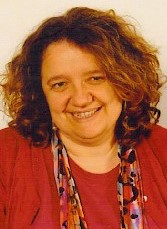
The following is a sermon by Peter Prove, director of the Ecumenical Advocacy Alliance
Preached as a Monday morning reflection at the Ecumenical Centre in Geneva on 9 August 2010
You can find the order of service and Bible reading here.
This week in the ecumenical prayer cycle, we journey again in prayer to Aotearoa New Zealand and Australia. We underline our relationship with our sisters and brothers in Christ in those countries. We express our solidarity with the peoples of both countries in their challenges and struggles. And we affirm again with the author of the book of Hebrews that “faith is the assurance of things hoped for, the conviction of things not seen”.
This classic definition of the irreducible essence of faith was originally offered to an early Christian community struggling with persecution, marginalization and fear; a community in need of support; a community - like so many of us still today - yearning for concrete reassurance that the madness and lostness we see all around us and within us are not the last truth about the world, but only the next to last truth.
Reassurance is given in the example of Abraham, who obeyed when he was called to go out from his place, not knowing where he was to go, but looking forward to the city which has foundations whose builder and maker is God. It is given in the example of Sarah, who by faith received power to conceive - and to become the mother of a nation - though she was long past the age of child-bearing. And though they did not reach the promised land, they saw it from afar, and died in faith as “strangers and exiles on the earth”. They did not think of the home they had left, but desired “a better country, that is, a heavenly one.” Such is the nature and example of faith.
In my own home country of Australia, a political revolution has taken place - a revolution at least by Australian standards. A sitting Prime Minister was brought down, to be succeeded by his deputy and giving Australia its first female Prime Minister. This welcome and historic sign of the growing maturity of Australian politics and society seems, however, to have a darker shadow. The issue at the crux of the political upheaval in Australia was the previous Prime Minister's proposal for a 20% 'super-tax' on mining industry profits. Though a reasoned debate might have concluded that the nation and people of Australia have a perfectly legitimate claim to a greater share of the proceeds of exploitation of its natural resources, mining industry lobbying and political influence ensured that no such debate would need to take place.
And now an election campaign is in full swing, driven largely by slogans and rather less largely by policy choices. Except of course for the fact that the super-tax proposal has been quietly shelved by our first female Prime Minister. And anyway, there is a certain irony in a nation founded on dispossession being dispossessed of the wealth of its soil. The historic apology delivered by our former Prime Minister to the Aboriginal Peoples of Australia still lacks adequate practical consequence.
It's confusing. In which direction is the better country?
In Aotearoa New Zealand a public debate is raging over large-scale foreign (i.e. Chinese) acquisition of dairy farm properties. A small competitive nation that sought greater access for its products in large emerging (i.e. Chinese) markets is now challenged by the flipside of liberalization. In this context, racism bleeds all too easily into the debate about national sovereignty. And again, national sovereignty becomes a contested concept from the perspective of the Maori people, who have seen the legal commitments of the Waitangi Treaty repeatedly and blithely disregarded.
It's confusing. By what path may we approach the land of God's promise?
The question is, do we really desire a better country, as Abraham and Sarah did, or are we content with the one we have? Do we look forward to the city which has foundations, whose builder and maker is God? Do we have faith in God's promise, and are we willing to go out, leaving our familiar homes, not knowing where we are to go, but trusting in God's promise to lead us there? Are we willing to be strangers and exiles on the earth, and to die in faith, not having received what was promised but having seen it and greeted it from afar?
Such a faith is not an antidote to reality; it is not belief in spite of the evidence. It is trusting in, looking towards, and setting our hearts upon things which are real, are known, and are urgently hoped for - knowing that the hope of heaven is not separate from the hope for a transformed world. The trials and confusions of today - this very day - are connected to the promised land just across the horizon. We step forward in faith not because we know the path, but because we trust in God's promise. Because we desire a better country, a heavenly one.
copyright Peter Prove
lundi 9 août 2010
The assurance of things hoped for ... A sermon by Peter Prove
Publié par Jane à 11:32 0 commentaires
Libellés : Australia, ecumenical prayer cycle, Faith, sermon
God of Kiwis and Kangaroos - an order of service for prayers for Aotearoa New Zealand and Australia
The prayers in this order of service were written by Lucy D'Aeth. The service was led by Jill Hawkey and the preacher was Peter Prove. I particularly love the God of Kiwis and Kangaroos in the final blessing.
Morning Prayer at the Ecumenical Centre
Monday August 9th
Ecumenical Prayer Cycle: Aotearoa New Zealand and Australia
Welcome
Gathering
L: In the name of the Creator, the fountain of life,
the name of Christ, the pulse of life,
and the name of the Spirit, the breath of life. Amen
People: Holy! Holy! Holy! Earth is filled with God’s presence.
L: Christ, we come into your presence today
To worship in this sanctuary called Earth
P: A planet filled with your presence,
quivering in the forests,
vibrating in the land,
pulsating in the wilderness,
shimmering
in the rivers.
L: God, reveal yourself to us in this place
and show us your face in your creation.
Song: Where mountains rise to open skies (see sheet)
Reading: Hebrews 11: 1-3: 8-16
Now faith is the assurance of things hoped for, the conviction of things not seen. Indeed, by faith our ancestors received approval. By faith we understand that the worlds were prepared by the word of God, so that what is seen was made from things that are not visible.
By faith, Abraham obeyed when he was called to set out for a place that he was to receive as an inheritance; and he set out, not knowing where he was going. By faith he stayed for a long time in the land he had been promised, as in a foreign land, living in tents, as did Isaac and Jacob, who were heirs with him of the same promise. For he looked forward to the city that has foundations, whose architect and builder is God. By faith, he received power of procreation, even though he was too old- and Sarah herself was barren-because he considered him faithful who had promised. Therefore, from one person, and this one as good as dead, descendants were born, “as many as the stars of heaven and as the innumerable grains of sand by the seashore”.
All of these died in faith without having received the promises, but from a distance they saw and greeted them. They confessed that they were strangers and foreigners on the earth, for people who speak in this way make it clear that they are seeking a homeland. If they had been thinking of the land that they had left behind, they would have had opportunity to return. But as it is, they desire a better country, that is, a heavenly one. Therefore God is not ashamed to be called their God; indeed he has prepared a city for them.
Reading: Luke 12: 32-40
“Do not be afraid, little flock, for it is your Father’s good pleasure to give you the kingdom. Sell your possessions, and give alms. Make purses for yourselves that do not wear out, an unfailing treasure in heaven, where no thief comes near and no moth destroys. For where your treasure is, there your heart will be also.
Be dressed for action and have your lamps lit; be like those who are waiting for their master to return from the wedding banquet, so that they may open the door for him as soon as he comes and knocks. Blessed are those slaves whom the master finds alert when he comes: truly I tell you, he will fasten his belt and have them sit down to eat and he will come and serve them. If he comes during the middle of the night, or near dawn, and finds them so, blessed are those slaves.
But know this: if the owner of the house had known at what hour the thief was coming, he would not have let his house be broken into. You also must be ready, for the Son of Man is coming at an unexpected hour”.
Song: Tama Ngakau Marie (Thuma Mina, No 47)
Reflection
Intercessions
Creator God,
We thank you for this new day and this new week. As we meet together on this summer morning, we remember our sisters and brothers across the globe in their winter evening and we thank you for the beautiful lands of Aotearoa and Australia – for the mountains and rivers, forests and beaches, the unique creatures and plants which shout the promise of these distant lands.
We remember before you all who call these lands ‘home’, that you may work through them to transform histories of suffering, violence and exile into communities of justice and peace.
God, in your mercy : Hear our prayer
God of justice and power,
We ask your blessing on all who make decisions about land use and resource management. We pray for politicians, business leaders, tribal elders, researchers and all who shape our planet’s future. Forgive us for our violent denial of indigenous wisdom, which taught us to treat our lands as our nurturing mother. Challenge the greed and despair which leads to the rape of this fragile planet; inspire us all to reverence and awe, that we may know your Spirit enlivening us as we journey into your promised land of justice and hope.
God, in your mercy : Hear our prayer
Gentle and surprising God,
Appearing when we least expect you, holding us in your web of love; weaving our diversity into your wholeness; we offer you our working week – our comings and goings, our deliberations and our efforts, that all may work to your glory. We pray for our colleagues, our families and our neighbours – all who make up the fabric of our daily lives. We pray for people of faith throughout the world, that through us, you may bring your promise of justice and joy, healing and hope to the whole world.
We ask all prayers in the name of Jesus Christ, our brother and our saviour.
Amen
Song: When the road runs out (see sheet)
Blessing
May the God of Abraham and Sarah bless us with hope,
May the God of kiwis and kangaroos surprise us into creativity,
May the pulsating, shimmering God, ever old and ever new, be with us, breathe through us, inspire and guide us, this and every day.
Amen
Publié par Jane à 10:52 0 commentaires
Libellés : Aotearoa, Australia, ecumenical prayer cycle, New Zealand, Prayers
lundi 2 août 2010
Education and research that brings blessing - speech by Alexander Schieffer
EDUCATION AND RESEARCH THAT BRINGS BLESSING
by Dr. Alexander Schieffer
TRANS4M Center for Social Innovation, Geneva, Switzerland
www.trans-4-m.com
Brief Speech given at the Morning Service at the World Council of Churches
August 2, 2010
I. OVERVIEW: REINVENTING RESEARCH AND EDUCATION
The vision of our Geneva based organization TRANS4M Center for Social Innovation is to reinvent education and research so that it innovatively engages with the burning social issues that a society is facing. Education and Research that truly responds to the burning needs of a society, for us, can be called “education and research that brings blessing”.
When we talk about “blessing” then we suggest, however, to not only focus on the burning needs of a particular society, but also on the gifts (the “blessings”) that each society, each culture has received. Research and education, as we understand it, needs to build on and activate these particular gifts. In other words, the often isolated emphasis on “poverty”, to our mind, dramatically overshadows the existing wealth in a particular context, be it in form of local knowledge, wisdom, values or relationships.
The dual focus on “burning needs and shining gifts” is hence at the very heart of our approach to research and education. But that is only the starting point. We need to go deeper and understand the major characteristics of an education and research that ultimately results in social innovation. For us there are four core characteristics, or the “four trans”
II. CORE CHARACTERISTICS OF “EDUCATION THAT BRINGS BLESSING”
Achieving innovation requires the stepping out of comfort zones, to move beyond existing borders. This “moving beyond” is reflected in “the four trans”: transdisciplinary, transcultural, transpersonal and transformational. I shall now introduce each of them:
1. Education and Research to bring “Blessing” need to be transdisciplinary: engaging with complex social issues requires not only that we simultaneously draw on the large variety of social sciences disciplines, but furthermore, that we bring these different disciplines in creative interaction with each other. Thereby we transcend conventional disciplinary borders. To foster such processes, education and research programmes need to purposefully bring together representatives from such diverse disciplines, and equally curriculum design needs to reflect this “trans-disciplinarity”.
2. Research and Education to bring “Blessing” need to be transcultural:
Until now, the vast majority of e.g. business, economics and development education, as well as research methods and methodologies are invented, developed and designed by the west, primarily by the US and Europe. For us, the starting point of all our educational and research processes is, however, the firm rooting in the cultural and social contexts we are active in. Once participants are strongly connected to their own “local identity” we facilitate the creative interaction between local and global knowledge perspectives, thereby entering the territory of innovation. Again, we find innovation in the “trans”, in the “in between” of various cultures, belief systems, faiths, in between the local and global
3. Research and Education to bring “blessing” need to be transpersonal:
For education and research to have a strong impact, they need to go beyond their existing individualistic orientation. It can’t be any longer about “my personal upgrading”, about “my degree”, about “my PHD”. In our Masters Programme on Social and Economic Transformation, for example, each participant engages, progressively, in individual, organizational and societal transformation.
4. Research and Education to bring “blessing” need to be transformational:
The final and all-encompassing feature of our programmes is their “transformational” character. Each programme takes the participant and his or her organization through a trajectory “from fundamental research to transformative action”.
How then do we put these core features in practice?
III. EDUCATION THAT BRINGS BLESSING, IN PRACTICE
We started our work by offering masters and doctoral programmes, in South Africa, Zimbabwe, Jordan, UK and the US. These programmes focus on social and economic innovation and are designed along the core features that I introduced. In each case we from TRANS4M Geneva work together with universities who accredited these programmes. Our friend and colleague, Dr. Sam Rima, for example, invited us into Bethel University, with whom we now offer a Doctor of Ministry Programme for Social and Economic Innovation.
We recognized, however, that the programmes themselves are not enough. What is further needed, is a more fundamental, institutional transformation on the level of the university. In other words, it is not enough, that the programmes are transdisciplinary, transcultural, transpersonal and transformational; much more, the university itself need to be reconceived along similar lines. This is a big step, but a university, that stands on these four pillars, has shifted from a “degree factory” to a “catalyst for societal renewal”. We call these universities “universities-4-humanity”. Imagine, the “blessing” that education and research could bring, if universities saw themselves in such new light, authentically serving humanity.
We are currently about to set up a global (or better: transcultural, and trans-faith) movement of such “universities-4-humanities”, each of them concerned with transforming the society they are lodged in. Major players within this movement are the Muslim based Heliopolis University for Sustainable Development in Egypt, the Buddhist based Sarvodaya Institute for Higher Learning in Sri Lanka, the more secular oriented School for Transformation of Deutsche Telekom in Germany and the Christian based Chinyika Village Learning Center. The Village learning Center in Zimbabwe, by the way, is the direct result of a project that came out of our Southern African Masters Programme. This project lead to food security of initially 20.000 and ultimately close to 200.000 people in Zimbabwe.
With all these Universities-4-Humanity we work together to co-create a new institutional approach to universities, so that these can truly serve society. Together, we co-creators of Universities-4-Humanity see an enormous potential to increase the potential blessing that research and education – reconceived in this new light – could bring to the world. Imagine! Perhaps we can even work together with you here, with ECLOF, with the WCC or other organizations present.
Imagine!!
Publié par Jane à 12:55 0 commentaires
Libellés : education
mardi 6 juillet 2010
Sermon notes by Guillermo Kerber from Uruguay - football, religion and hope
On football, religion and hope
Some sermon notes by Guillermo Kerber - sermon preached on June 21 2010 in the week we were praying for Paraguay, Argentina and Uruguay
Football plays a key role in these countries.
More than a role, closer to a religion.
Eduardo Galeano, an Uruguayan writer asks, “What do football and God have in common? The devotion of the believers and the rejection of many intellectuals” and then he quote among others Rudyard Kipling and Jorge Luis Borges.
Sociologists have studied football as religion. The power of belonging, stadiums as new cathedrals, with thousands of passionate believers, not one but 11 or 22 priests, pastors. Sacifice, idols.
A theological approach to football, as some have done, if your team lose, the suffering servant of Isaiah, if you win, the triumph of Christ.
As religion, football also has its positive and negative dimensions. The paradox of football is that, while being a clear example of non-violence, its rules leading to success without violent, many times is related to violence on the field also outside (hooliganism), as Prof Dennis Muller, ethicist and theologian from Lausanne, states (Football, its gods and demons). “IN every supporter there is a potential violence” (Müller)
Footbal has become a globalized sport. Even in USA, not a football fan, 130,000 tickets for the World Cup matches were sold.
Lookint at some matches you can see the beauty of the movement of the bodies, team building, hope of supporters, and wisdom.
Wisdom in Proverbs is a “she”. Wisdom plays with creation, as footballers play with a ball.
How much do we, adults, play? We think we are serious, theologians, pastors, intellectuals, professionals, and we don’t play. But wisdom, a “she” “is the mistress of the art of thought” (Prov). It is difficult, for our male-based dominant culture to accept all the attributes she has according to Proverbs.
In a difficult world, in a difficult situation in the WCC, we need wisdom, we need to play, we need hope, we need to “discern the signs of the times”. Let’s pray the Holy Spirit, let’s pray to Her, so that we can find our ways
Publié par Jane à 13:03 0 commentaires
Morning prayers for the beginning of the Football World Cup
It so happens that as the soccer world cup started the Ecumenical Prayer Cycle turned to South America.
While I was attending the WCRC assembly in Grand Rapids my colleague Guillermo Kerber from Uruguay led morning service concetrating on football and God's playfulness. Wish I had been there!
Morning prayers Ecumenical Centre Geneva
Monday, June 21, 2010
(Argentina, Paraguay and Uruguay)
Welcome
Song: Coritos #2
Opening prayer
(Bishop Aldo Etchegoyen, Argentina)
1. O God, Lord of the wind and the sea,
of the mountains and the valleys,
of the world and of the church:
In the midst of fear and insecurity
give us trust and hope in you
2. We live in a world where the gales of power
blow strong enough to shake life itself,
where from the arrogant and the interests of the powerful
roll the waves of injustice and violence.
1. We pray for those suffering
because of their poverty, their ignorance, their limitations,
because of their colour or status, social or sexual.
We think of your church sailing on a sea
where the waves of racism, militarism, sexism
and economic marginalization hurt human life.
2. Take care of your church and put in it
a sincere love for those who suffer,
a clear vision of your will,
healing pastoral words for the needy
and a valiant, prophetic proclamation
against those who create violence and pain.
1. O God, Lord of the wind and the sea,
may your strong mercy calm the whole earth
in the name of Jesus Christ
All: Amen
Readings
From the Book of Proverbs, chapter 8, 1- 30 (excerpts) (NJB)
“Is not Wisdom calling? Is not Understanding raising her voice? On the heights overlooking the road, at the crossways, she takes her stand; by the gates, at the entrance to the city, on the access-roads, she cries out, 'I am calling to you, all people, my words are addressed to all humanity. Simpletons, learn how to behave, fools, come to your senses.
Listen, I have something important to tell you, when I speak, my words are right. My mouth proclaims the truth, for evil is abhorrent to my lips… For Wisdom is more precious than jewels, and nothing else is so worthy of desire.
'I, Wisdom, share house with Discretion, I am mistress of the art of thought. I hate pride and arrogance, wicked behaviour and a lying mouth. To me belong good advice and prudence, I am perception: power is mine! By me monarchs rule and princes decree what is right; by me rulers govern, so do nobles, the lawful authorities.
I love those who love me; whoever searches eagerly for me finds me. With me are riches and honour, lasting wealth and saving justice. I walk in the way of uprightness in the path of justice, to endow my friends with my wealth and to fill their treasuries.
'Yahweh created me, first-fruits of his fashioning, before the oldest of his works. From everlasting, I was firmly set, from the beginning, before the earth came into being. The deep was not, when I was born, nor were the springs with their abounding waters. Before the mountains were settled, before the hills, I came to birth; before he had made the earth, the countryside, and the first elements of the world.
When he fixed the heavens firm, I was there, when he drew a circle on the surface of the deep, when he thickened the clouds above, when the sources of the deep began to swell, when he assigned the sea its boundaries -- and the waters will not encroach on the shore -- when he traced the foundations of the earth, I was beside the master craftsman, delighting him day after day, ever at play in his presence, at play everywhere on his earth, delighting to be with the children of men.
Song: El cielo canta alegría, Alleluya (Argentina, Thuma Mina 54)
From the Gospel according to Matthew 16, 1-4 (NJB)
The Pharisees and Sadducees came, and to put him to the test. They asked if he would show them a sign from heaven. He replied, “In the evening you say, ‘It will be fine; there's a red sky’, and in the morning, ‘Stormy weather today; the sky is red and overcast’.
You know how to read the face of the sky, but you cannot read the signs of the times!
It is an evil and unfaithful generation asking for a sign, and the only sign it will be given is the sign of Jonah.'
And he left them and went off.
Meditation – “On football, religion and hope” – Guillermo Kerber (Uruguay)
Prayers of intercession
This week, according to the Ecumenical Prayer Cycle, we are invited to pray for the people and the churches in Argentina, Paraguay and Uruguay. Let’s pray for them.
God of Mercy, have mercy with the people in these countries, especially with the poor and most vulnerable: indigenous peoples, women, children, and the elderly, in their uncertainty, fear and distrust as they face their future. Give your Wisdom to their governments democratically elected, so that they may discern what needs to be done in the name of justice, peace and care for creation. Sustain and strengthen through your Spirit, the churches in those countries, so that they remain a prophetic voice unbound by political and economic alliances and with all people. Grant just peace to these countries and their citizens, O Lord.
Ore Poriahu (Paraguay) (Thuma Mina 46)
Let us pray for ourselves, for our families, organizations and churches
God of Grace, you have called us to labour and play in your vineyard. Without you we can do nothing. Grant us your gracious presence in our forthcoming meetings, works and holidays. Inspire us so that all our decisions at the personal and institutional levels follow your Wisdom.
Ore Poriahu (Paraguay) (Thuma Mina 46)
Let us pray for our homelands and for all the nations of the world
God of Playfulness, behold and visit, we pray, the nations of the earth. Let the world rejoice with the beauty and passion of the Football World Cup. But especially enable us to eliminate poverty, prejudice, injustice and oppression, that peace may prevail with righteousness and justice with fairness, and that men and women from different cultures and religions, and with different talents may find with one another the fulfilment of their humanity.
Silence
Song: Santo, santo, santo, santo (El Salvador) (Thuma Mina 117)
The Lord’s Prayer (in your own language) (stand)
Blessing
The Lord bless our eyes that we may see clearly
The Lord bless our mouth that we may speak the truth
The Lord bless our ears that we may hear those who speak to us
The Lord bless our hearts that we may be open to the poor;
The Lord bless our feet that we may walk with humility and courage,
In the Name of the Father, of the Son and of the Holy Spirit
All: Amen
Final song : Tenemos esperanza (Argentina – Uruguay)
Publié par Jane à 12:43 0 commentaires
Libellés : Argentina, ecumenical prayer cycle, Uruguay
lundi 5 juillet 2010
An order of service for communion
Morning Worship and Eucharist
in the spirit of Leuenberg and Porvoo
Monday 5 July 2010
The Ecumenical Chapel, Geneva
The Ecumenical Prayer Cycle focuses this week on
Colombia, Ecuador and Venzuela
An open invitation to the Eucharist is extended to all,
with due repect for churches’ varied positions on intercommunion.
Co-presidents: Revds Karin Achtelstetter (Lutheran) and Theodore Gill (Reformed)
Preacher: The Venerable Colin Williams (Anglican)
Welcome
Gathering
Sing praises and give thanks to God, all you who are faithful.
Let us give thanks to God, and praise God’s holy name.
For God turns mourning into dancing, and clothes us with joy.
O Lord our God, we will give you thanks forever and ever! Amen.
Sing: Cantai ao Senhor Agape 12
Verse 1 in Portuguese, 2-3 in English, 4-5 in French
God of justice and of mercy,
You turn our mourning into dancing, our darkness into light, our sorrow into joy.
We give you thanks.
Forgive us our sin, we pray.
Empower us by your Spirit to follow in Christ’s way,
displaying and proclaiming the good news of your abundant goodness.
We bring our prayers for the world and the church, the rich and the poor, the strong and the struggling. We bring prayers for our families and friends, and for those unknown to us but well-known to you. This week we pray especially for the people, the churches and the cultures of Colombia, Ecuador and Venezuela.
In the name of Jesus: Amen.
The Lord’s prayer (we each pray aloud in our own language)
Ministry of the Word
Galatians 6:7-14
Do not be deceived: God is not mocked, for you reap whatever you sow. If you sow to your own flesh, you will reap corruption from the flesh; but if you sow to the Spirit, you will reap eternal life from the Spirit. So let us not grow weary in doing what is right. For we will reap at harvest time, if we do not give up. So then, whenever we have an opportunity, let us work for the good of all, and especially for those of the family of faith.
See what large letters I make when I am writing in my own hand! It is those who want to make a good showing in the flesh that try to compel you to be circumcised – only that they may not be persecuted for the cross of Christ. Even the circumcised do not themselves obey the law, but they want you to be circumcised so that they may boast about your flesh. May I never boast of anything except the cross of our Lord Jesus Christ, by which the world has been crucified to me, and I to the world.
The Word of the Lord.
Thanks be to God!
Luke 10:1-11, 16-20
After this the Lord appointed seventy others, and sent them on ahead of him, two by two, into every town and place where he himself was about to come. And he said to them,
"The harvest is plentiful, but the labourers are few; pray therefore the Lord of the harvest to send out labourers into his harvest. Go your way; behold, I send you out as lambs in the midst of wolves. Carry no purse, no bag, no sandals; and salute no one on the road. Whatever house you enter, first say, 'Peace be to this house!' And if a son of peace is there, your peace shall rest upon him; but if not, it shall return to you. And remain in the same house, eating and drinking what they provide, for the labourer deserves his wages; do not go from house to house. Whenever you enter a town and they receive you, eat what is set before you; heal the sick in it and say to them, 'The kingdom of God has come near to you.' But whenever you enter a town and they do not receive you, go into its streets and say, 'Even the dust of your town that clings to our feet, we wipe off against you; nevertheless know this, that the kingdom of God has come near.'
… "He who hears you hears me, and he who rejects you rejects me, and he who rejects me rejects him who sent me." The seventy returned with joy, saying, "Lord, even the demons are subject to us in your name!" And he said to them, "I saw Satan fall like lightning from heaven. Behold, I have given you authority to tread upon serpents and scorpions, and over all the power of the enemy; and nothing shall hurt you. Nevertheless: do not rejoice in this, that the spirits are subject to you; but rejoice that your names are written in heaven."
Sing: Thuma mina Agape 91
All three verses in Zulu
Meditation
The Venerable Colin Williams
Sing in Spanish: Santo, santo, santo Agape 81
The Sacrament of the Eucharist
Peace be with you.
And also with you.
Lift up your hearts.
We lift up our hearts to the Lord!
Let us give thanks to the Lord our God.
It is fitting and right to give God thanks and praise.
It is truly fitting and right, Holy, Almighty and Eternal God, that we should give you
thanks and praise, at all times and in every place, through Jesus Christ our Lord.
For you sent him to offer salvation to the world;
through his death you made possible the forgiveness of our sin,
and through his resurrection we realize your gift of abundant life.
Therefore the angels offer praise at your throne; with the company of the heavenly host, we unite our voices in celebration and join in the song without end.
Sing: Santo, santo, santo Agape 81
In Spanish.
O Christ, you invite us to gather at your table, to share the bread and wine with you.
By the power of your resurrection, you open our minds to your presence.
O Christ, the bread and wine communicate your life, death, and resurrection to life.
You transform our humanity by your love.
In the midst of suffering and brutality, you awaken us to hope and the promise of peace.
Lord God, send your Holy Spirit to unite us in Christ and make us your faithful people.
Words of Institution
This is the account of the holy supper of our Lord as delivered by the apostle Paul:
I have received from the Lord that which I now deliver to you, that on the same night that he was betrayed our Lord took bread; and, when he had given thanks, he broke it and gave it to his disciples, and said, “Take, eat. This is my body, which is given for you. Do this in memory of me.” In the same way, he took the cup after supper, and said, “This cup is the new covenant in my blood. Drink from it, all of you, in memory of me.” For as often as you eat this bread and drink from this cup, you proclaim the Lord’s death until he comes again in glory.
Let us proclaim the mystery of faith.
Christ has died.
Christ is risen.
Christ will come again!
Lord our Creator, we praise you, for you love us and we are your children.
We praise you for Jesus Christ, alive in our midst.
We praise you for the Holy Spirit who gathers us together despite our differences.
We praise you for calling us to unity, and for making us one.
We recall your goodness toward us, for you have opened the gates to your kingdom
through Jesus Christ our Lord and Saviour. Amen.
And now, ministering in Christ’s name, we take this bread and this wine to be set apart by prayer and thanksgiving to the holy use for which he intended them.
Most gracious God and Father of our Lord Jesus Christ, we give you our thanks.
Sanctify by your Word and Spirit these your own gifts of bread and wine,
that we may by faith receive Christ crucified for us, and so feed upon him
that he may become fully one with us, and we with him.
And here we offer and present to you ourselves, our souls and bodies,
to be a reasonable, holy and living sacrifice;
and we ask you mercifully to accept this our sacrifice of praise and thanksgiving,
as, in fellowship with all the saints in heaven and on earth,
we pray that you may fulfill in us, and in all people, the purpose of your redeeming love.
This we pray through Jesus Christ our Lord, to whom, with you and the Holy Spirit,
be the glory and the praise, both now and forever.
Amen.
The peace of the Lord be with you all!
[The congregation exchanges signs of peace.
Those who wish to commune or receive a blessing
come forward to surround the Lord’s table.]
Ubi caritas
Thanksgiving
Lord, we give you thanks for your great mercy given us in this sacrament, through which we are made partakers of Christ. So enrich us by the power of your Holy Spirit that the life of Jesus may be made manifest in us, and the remainder of our days may be lived in your love and service. In Jesus’ name we pray.
Amen.
Sending
For the simplicity of this bread and wine, praise to God our maker.
For the simple gift of Christ’s presence here, praise to the Lord.
For the Spirit that surrounds us always, praise to the Triune God.
Amen.
Go forth in peace, to love and serve the Lord.
Sing: Komm, Herr, segne uns Agape 45
Verse 1 in German, 2 in English, 3 in French, 4 in German
This service was put together by Thedore Gill and Karin Achtelstetter
Publié par Jane à 10:56 0 commentaires
Libellés : eucharist
mardi 25 mai 2010
Pentecost - the great feast of communication - a sermon by Stephen Brown
Pentecost - the great feast of communication
Stephen Brown, meditation at the Ecumenical Centre, 25 May 2010
When the day of Pentecost had come, they were all together in one place. And suddenly from heaven there came a sound like the rush of a violent wind, and it filled the entire house where they were sitting. Divided tongues, as of fire, appeared among them, and a tongue rested on each of them. All of them were filled with the Holy Spirit and began to speak in other languages, as the Spirit gave them ability. Now there were devout Jews from every nation under heaven living in Jerusalem. And at this sound the crowd gathered and was bewildered, because each one heard them speaking in the native language of each. Amazed and astonished, they asked '… How is it that we hear, each of us in our own native language? In our own languages we hear them speaking about God's deeds of power?'
When I heard last week that there was not yet a preacher for today, I jumped - maybe rashly - at the opportunity to offer a meditation this morning. For since I was very young, this has been one of my favourite texts from the Bible. I've never quite worked out why, maybe it is because of the action-packed nature of the story that the writer of Acts describes. Not a moment is lost in setting the scene. "When the day of Pentecost came, they were altogether in one place". Immediately there is the rushing noise of a violent wind, the tongues, 'as of fire' appearing among the disciples. And there is the transformation of the speech of the disciples so that those gathered from every nation under heaven can hear of God's deeds of power in their own language. And then, the wry comment by those that hear the disciples that they are "filled with new wine".
For some one, like me, who is involved in communication, this text speaks of communication in its most profound sense - and communication that involves all the senses. Here we encounter the physicality of the Holy Spirit: the sound and the touch of the wind, the appearance of the tongues of fire that take on physical form, resting on each of the disciples. In his book, The Spirit of Life, Jürgen Moltmann describes how the Pentecost narrative needs to be seen against the background of the Hebrew Scriptures, where God's Spirit Ruach has quite a different meaning from the western tradition of thinking about the Spirit. God's Ruach is not something supernatural or immaterial but is "a tempest, a storm, a force in body and soul, humanity and nature". Ruach, says Moltmann, is the "breath of God's voice". (1) So, Pentecost is about communication of all the senses. It is this breath of God's voice that enables God's deeds of power to be heard by each in their own language. Pentecost is the great feast of communication.
Pentecost is sometimes described as the counterpoint to the account of the building of the Tower of Babel. The story in Genesis describes how at the beginning the whole earth had one language and the same words. Then the Lord confused the language of all the earth; and from Babel "scattered them abroad over the face of all the earth". At Babel, so it goes, the nations were scattered, at Pentecost they are gathered together. Yet, look closer at the text. The tongues of flame do not create a single language; it does not mean that those in Jerusalem are speaking in one language. Instead, each person hears in their own speech. God's Spirit breaks down the barriers between nations, the barriers of culture, and the barriers of language. Being drawn together, being one, does not mean being identical. It means transcending the barriers that separate us, holding together our diversity in the power of the "breath of God's voice". This is a pronounced and profound experience of communication. And it is through this great "communicative act" that the disciples are able to communicate "God's deeds of power".
Still, if Pentecost is a profoundly "communicative" experience, it is also a profoundly "ecumenical" experience. At Pentecost in Jerusalem, representatives are gathered from "every nation under heaven", in other words, from the whole inhabited world, or, in Greek, from the oikoumene. It is at Pentecost that God's Spirit descends upon the oikoumene, gathered at this great ecumenical assembly in Jerusalem. So, Pentecost as the foundational event of the church is both communicative and ecumenical. Through God's embracing and inclusive Spirit we can comprehend the oikoumene in all its fullness, one in which that which was scattered is gathered together in a unity that transcends the economic and political divisions of the world.
In our spirit-filled ecumenical existence, communication is at the very heart. It is through communication that we can become one - not despite our diversity, but in our diversity; not as an end in itself, but to speak about God's deeds of power. Communication in the oikoumene - ecumenical communication in its deepest sense - has this two fold character: the holding together of the oikoumene, and recounting God's deeds of power in Jesus Christ.
What does this mean for us as people drawn from many nations under heaven, for those of us gathered in this Ecumenical Centre? What does it mean for our calling as God's sign of communication in the world?
Firstly, communication is not something that is added on to our programmes or activities. It is not (only) about the technical tools we use to communicate. Communication is at the centre of our ecumenical existence. As Philip Potter, once general secretary of the World Council of Churches, puts it, "The kingdom of God, and koinonia, community, a common life, communication, are one reality" (2). We need to find ways in which this becomes a reality in our life in the oikoumene, not as a task only for communication professionals, but in which we mediate the flow of communication within the fellowship of churches (3).
But, secondly, this communicative existence of the oikoumene is not something that stands in an either/or relationship with the task of professional communication and relating to the public media. The communicative act of understanding at Pentecost was precisely to make known God's deeds of power. In our globalised world, we need to use all means at our disposal, with all their ambiguity, to make known God's deeds of power. We need, as the hymn we are to sing puts it, "to find our tongue [and] tell the world what God has done" - whether using the Internet, or Facebook, or Twitter … news stories, interviews, speeches, or even sermons!
There is, however, also a "third way" - maybe the most profound way - in which communication is at the heart of our spirit-filled ecumenical existence. Later in the passage from Acts we can read how the disciples continued to break bread together. Communication is also to communicate, to share together in the Eucharist, the Lord's Supper, united in the oikoumene in space and in time, transcending the divisions of the world. Here we are called together by the love that unites that which has been divided. At this meal, even the inadequate disciples are accepted. This is the meal of the suffering Lord who is in solidarity with the oppressed, and the meal of the one who has risen, who sends us to renewed action (4). Yet it is also here, that our own divisions in the oikoumene become most apparent and most painful. Our communication together at the Lord's Supper is incomplete, is only a partial sign of the unity to which the breath of God's voice has called us.
At Pentecost, let us therefore listen to God's renewing Spirit who calls us to prayer and to action that this meal may no longer be a sign of our division, but a symbol of the unity that God intends for the whole inhabited world - a sign that that which has been scattered has been brought together in Christ. At this feast of communication, let us revel therefore in the gift of God's Spirit, who goes before us, making whole that which is broken, calling us to be God's Pentecost people, in word, in bread, in wine.
And to God’s name be the praise and the glory.
1. Jürgen Moltmann, The Spirit of Life: A universal affirmation, London: SCM Press Ltd, 1992, pp. 40-40.
2. Quoted in "Communicating with Conviction", Issue Paper VIII, Discussion papers arising out of the life and work of the World Council of Churches in Preparation for its Sixth Assembly, Vancouver, Canada, July 24 to August 10, 1983. Geneva: WCC, 1982.
3. Cf: Konrad Raiser, Report of the General Secretary, in The Ecumenical Review, vol. 52, no. 1, January 2000, p. 99.
4. Cf: Heino Falcke, Christ liberates - therefore the Church for Others, in The Ecumenical Review, vol. 65, no. 2, April 2004, p. 183.
Publié par Jane à 09:33 0 commentaires
Libellés : communication, Ecumenism, Pentecost, sermon
samedi 22 mai 2010
A Psalm of ascent to retirement for Yvette Milosevic
A Psalm of ascent to retirement for Yvette Milosevic
Introducing this at her retirement party Theodore Gill described it as "a cry, a sigh and a doxology". The Ecumenical Centre worship committee will miss Yvette enormously, writing this and saying it together helped us begin our leave taking with laughter as well as tears.
I lift up my eyes to the hills
from whence comes Yvette
My help comes from the Lord,
who sent us Yvette who puts flowers in the chapel.
The Lord will not let your foot be moved;
And will make sure Yvette neither sleeps nor slumbers.
The One who keeps the Ecumenical chapel
will send Yvette to provide oil and ash on Ash Wednesday.
The Lord is your keeper;
Providing photocopies at your right hand and hymnbooks at your left.
The sun shall not rise in time for morning prayer,
nor shall the heating or ventilation ever be switched on.
For the microphones may only work occasionally
And the candles tend to drip wax mightily
Yvette we pray that the Lord will keep you from all evil;
For we know you are good
That he will keep your life.
Yvette may the Lord keep
your going out and your coming in
from this time on and for evermore.
Publié par Jane à 12:48 0 commentaires
Libellés : friendship, fun, Psalm, retirement
A few words for Yvette Milosevic' leaving party
Dear Yvette
Thinking about how to say thank you to on behalf of the worship committee a line from a song came into my mind. Not a holy song from Thuma Mina or Agape or any other hymnbook but a rather saucy ditty from Rogers and Hammerstein’s musical Oklahoma which starts “I’m just a girl who can’t say no …”
I suppose I thought of that because for the handful of us still left on the worship committee you have been the person who says yes, often even before the question has been asked. We want to thank you for your faithfulness, your practicality, your extraordinary spirit of service and your enormous thoughtfulness. Thank you for all you have done, thank you for your meditations and prayers, thank you quite simply for being you.
It’s wonderful that you’re retiring at Pentecost time, first of all it’s a great season for gardening, which I know you will enjoy. But it’s the festival which ushers in ordinary time in the western church calendar and the Sundays between now and Advent are referred to by Pentecost and a number. So we hope that as you enter into the ordinary time of retirement it may continue to be a Spirit-filled time for you, a time when you can say “yes” not only to duty but also to delight.
In my heretical way, I suspect that God’s energetic, creative, comforting, gentle, challenging, spirited Ruach is actually also in part “just a girl who can’t say no…”
I am not going to begin to say how much we will miss you because my spirit will probably fail me. Know that we will – know also of course that we count on you to get the retired members organized to come back and lead worship.
Most of all we pray that the Spirit may continue to give you strength to say yes to life in a long and happy retirement as you sing a new song.
Thank you for everything.
(Colleagues on the worship committee Manoj Kurian and Karin Achtelstetter then led us in a prayer to the Holy Spirit written by Manoj and presented her with a painting depicting the fiery spirit, also by Manoj. Meanwhile Terry Macarthur led our singing. Later Yvette received a Ginko tree to plant in her garden from all of her colleagues.)
Publié par Jane à 12:29 0 commentaires
Libellés : feminist theology, friendship, Pentecost, worship committee