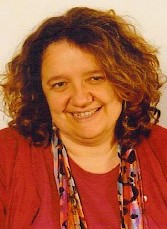
This reflection for St Laurence's Day was preached by Michael Wallace with help from Emma Halgren. It was part of worship prepared for Monday morning 10 August 2009 as we were praying this week for Australia and New Zealand through the ecumenical prayer cycle. Find the full liturgy here.
Reflection for Australia NZ service August 10th 2009
St Laurence
As you know this week the Ecumenical Prayer Cycle remembers Aotearoa New Zealand and Australia. Today we also remember St. Laurence who was martyred at Rome in 258.
In this morning’s Gospel Jesus says, ‘Very truly, I tell you, unless a grain of wheat falls into the earth and dies, it remains just a single grain; but if it dies, it bears much fruit.’
Through his actions in the face of imperial power and in his death, Saint Laurence bore much fruit for our understanding of what we should value most highly.
One of the seven deacons in Rome during the time of Pope Sixtus the second, Laurence was in charge of distribution of alms to the poor.
In 258, the emperor Valerian put to death numerous priests and deacons. When Pope Sixtus was beheaded in this persecution, the prefect of Rome demanded that Lawrence surrender to him the riches of the Church.
Lawrence asked the prefect for three days to gather together the church’s wealth. He then worked swiftly to distribute as much Church property as possible to the poor. On the third day he presented himself to the prefect, and when ordered to give up the treasures of the Church, he presented the poor, the crippled, the blind and the suffering and said, "Behold the treasures of the Church!"
This act of defiance led directly to his martyrdom on August 10th.
Lawrence defied the oppressive power of his day. In spite of the threat of death he kept his focus on serving Christ and his people. Even though the church lost a deacon it gained encouragement to resist the powers of evil. Laurence is remembered for his courage and his focus on not only serving but also valuing the poor.
Laurence’s life challenges us to ask about our own lives:
Are we clear about our role in caring for the poor and marginalised as the treasures of the church?
Are we prepared to serve and follow Christ even when it may lead us into persecution?
In our times of trial, will we be grains of wheat bearing fruit?
Mary McKillop
In this morning’s reading from 2 Corinthians we heard:
‘The one who sows sparingly will also reap sparingly, and the one who sows bountifully will also reap bountifully.’
Emma will now share with us about an Australian woman who sowed bountifully for God amongst the poor and suffering- Blessed Mary McKillop.
Mother Mary MacKillop
On August 8 2009, Christians around the world remembered the life and witness of Mother Mary MacKillop, a woman of Australia who died on this date in 1909. An educator and advocate of children, Mother Mary suffered at the hands of her own church for her convictions about the education of the children committed to her charge. She founded an Australian religious order which was responsible for the establishment of schools, orphanages, and shelters for women. She was beautified by Pope John Paul II in 1995. Today her witness is celebrated by Roman Catholics and beyond, and by the Christian churches of Australia and beyond.
Witnessing to Christ in New Zealand and Australian cultures
In Australia and New Zealand the churches witness to Christ in the context of powerful landscapes and fragile cultures.
In the process of colonisation indigenous cultures have been deliberately wiped out, impoverished, or sidelined. Indigenous people have been persecuted for speaking their languages, holding their beliefs and living in traditional ways. Sacred places have been confiscated and desecrated. The seeds of faith in indigenous cultures were not recognised.
The settler cultures of Australia and New Zealand are fragile too. Colonisation has transplanted European cultures, expectations and religious practices, but left many with shallow roots in both the old world and the new. Systems based on oppressing indigenous people and exploiting Creation have slowly begun to be recognised as unjust and unsustainable.
More than two centuries after it was first introduced by European missionaries, the seed of the Gospel struggles to take root in the hearts and minds of many New Zealanders and Australians.
The fragility of our cultures creates a situation where the demands and values of commerce can override everything else. Commerce threatens to fill the space of culture and religion, and sideline history and shared meaning.
Yet in this context a powerful spiritual yearning still arises. Despite their highly secular worldview and alienation from faith, people want to be part of an heroic and inspiring story, to believe in the kind of self-sacrifice that is displayed in the life of St. Laurence and Blessed Mary McKillop.
ANZAC Day
A challenging opportunity for Christian witness in our countries today is ANZAC day.
A phenomenon has recently arisen where young New Zealanders and Australians are finding meaning and inspiration in the stories of the Australia New Zealand Army Corps, known as the ANZACS.
Joining forces for the World War One battle of Gallipoli on April 25, 1916, the actions of the young men in the Australia New Zealand Army Corps demonstrated the values of courage, loyalty and self-sacrifice that were to form a crucial part of the self-identity of both countries at a crucial stage of their development as nations.
Reclaiming the heroic stories of their forebears, and filled with a desire for identification with the highest values of those who served, young people in their thousands now come forward to honour the sacrifice of those women and men, indigenous and settler who laid down their lives in the First World War and subsequent conflicts.
Although ANZAC day is a national holiday in both countries, for decades most people avoided ANZAC day observances due to concerns about glorifying war, or because they failed to see its relevance.
As Christians how do we engage with the young people who come to church once a year often at dawn and in bad weather for an ANZAC day service?
How can we connect the spiritual yearning that we see on ANZAC day with the lives of St. Laurence and Blessed Mary McKillop and to point people toward Christ?
Conclusion
How can we preach the gospel in these two countries with their myriad indigenous cultures and 200-year-old settler cultures? How can we preach the gospel in places of suppression of indigenous spiritualities and of transplanted Christianity? Where commerce would take priority over everything else?
What we can do is share the gospel of Jesus Christ in a way that celebrates Creation, that acknowledges the injustices of colonisation, that honours and challenges our fragile cultures, that connects us with inspiring lives like Laurence and Mary McKillop, in a way that gives us the correct perspective on wealth. We need to remind ourselves that God loves us and that we should love one another.
We can remind people that there is meaning to be found on days other than just ANZAC day. We can invite people to offer their lives not for some military gain for a colonial or imperial power, but to gain life in its fullness. We can show that through the love of Christ and service to others we can discover the true value of life.
To lose your life for your country or for your friends is to lose your life heroically, but to lose your life for Christ is to win something far greater than remembrance or identity, it is to become part of the life of God. Eternal life, God’s unlimited love.
‘The point is this: the one who sows sparingly will also reap sparingly, and the one who sows bountifully will also reap bountifully.’
Collect for St Laurence
Almighty God, you called your deacon Laurence to serve you with deeds of love, and to be a wise steward of the treasures of your church; Grant that we, following his example, may fulfil your commandments by defending and supporting the poor, and by loving you with all our hearts; through Jesus Christ our Lord, who lives and reigns with you and the Holy Spirit, one God for ever and ever.
Amen
lundi 10 août 2009
A sermon for St Laurence's day preached by Revd Michael Wallace
Publié par Jane à 12:19 0 commentaires
Libellés : Australia, New Zealand, WSCF
vendredi 12 septembre 2008
Statement of the World Student Christian Federation on the Announcement of an Agreement to Form an Inclusive Government in Zimbabwe
Statement of the World Student Christian Federation
On the Announcement of an Agreement to Form an Inclusive Government in Zimbabwe
The World Student Christian Federation welcomes the announcement of an agreement to form an inclusive Government in Zimbabwe. While we await the full details our thoughts and prayers are with the students, young people and ordinary families in Zimbabwe at this critical juncture. Having suffered so much from a legacy of violence, food shortages, unemployment, collapsed health, education and other vital services – we hope that the agreement will be implemented in a way that fully addresses the dire needs of ordinary Zimbabweans.
WSCF also fervently hopes that this historic agreement marks Zimbabwe’s return to the rule of law and to effective governance for and by the people. We hope that the political leaders will be guided by the principles of good faith and be faithful to the agreement and work selflessly towards its proper implementation.
We trust that the global ecumenical movement and the international community will fulfill their pledge to support the people of Zimbabwe as they begin a challenging process of national healing, reconciliation, reconstruction and renewal.
Reverend Michael Wallace
General Secretary
World Student Christian Federation
About the WSCF
The World Student Christian Federation is a global movement of students working for dialogue, ecumenism, social justice and peace. Founded in 1895, the Federation brings together more than 2 million students in 105 national student Christian movements.
Website www.wscfglobal.org
Publié par Jane à 09:37 0 commentaires
vendredi 25 avril 2008
Liturgy for the World Day of Prayer for Zimbabwe
Ecumenical Centre Chapel Monday April 28th 2008
Day of Prayer for Zimbabwe
A service asking for justice, peace and healing in Zimbabwe
Organised by the WSCF and the World YWCA
Call to prayer
We gather to remember and accompany the people of Zimbabwe, in the name of the blessed Trinity, one God, now and forever.
Amen
O Lord, open my eyes,
that I may see the need of others,
open my ears that I may hear their cries,
open my heart so that they need not be without succour.
Let me not be afraid to defend the weak because of the anger of the strong,
nor afraid to defend the poor,because of the anger of the rich.
Show me where love and hope and faith are needed,
and use me to bring them to these places.
Open my eyes and ears that I may, this coming day,
be able to do some work of peace for you.
Song: Uyai, O vanhu ve se, u yai kuna Mambo Jesu (Come all you people, come to our Lord Jesus)
Confession of sins
God of liberation and justice,
Defender of the poor and marginalized,
we seek your guidance.
Give us the vision and confidence to become prophets when resources are looted.
Let us hear the cry of the widows.
Let us feed the orphans.
Let us denounce injustice by the powerful.
May we demand drugs for the sick.
May we demand care for the abandoned.
May we denounce wastefulness by the affluent.
Forgive our silence.
Forgive our complicity.
In your mercy, forgive our condemnation of people living with HIV.
Forgive us when we deal lightly with the wounds of your people.
Forgive the times when we have offered artificial solutions.
Empower us to tackle corrupt systems,
Make us instruments of your peace.
Make us agents of transformation.
In Jesus’ name we pray.
Amen
Reassurance of pardon
Is not this the fast that I choose: to loose the bonds of wickedness, to undo the thongs of the yoke, to let the oppressed go free, and to break every yoke?
Then shall your light break forth like the dawn, and your healing shall spring up speedily;
(Isaiah 58)
Almighty God who pardons all who truly repent, forgive your sins, strengthen you by the Holy Spirit, and keep you in life eternal; through Jesus Christ our redeemer.
Amen
Old Testament Reading: Psalm 85
Song: Verses I and 2 of Rakanaka Vhangeri
(Come and hear now the gospel, hear the good news)
Gospel reading: John 14:15-21
Song: Verse 3 of Rakana Vhangeri
Testimony
Intercessions
Sung response: Kunda Kwenyu Nga ku it we. (Your will be done Your will be done O Lord)
We pray for the political situation in Zimbabwe that it may be resolved quickly and peacefully.
We pray that whatever announcement is made in the near future, peace will be restored to the land.
All sing: Kunda Kwenyu Nga ku it we
We pray that calm leadership will prevail, not leadership fuelled by half-truths and propaganda.
We pray that intimidation and violence will cease.
All sing: Kunda Kwenyu Nga ku it we
We pray that in the face of intimidation and violence people will remain firm in the truth of their convictions and will continue to vote their real desires should there be a runoff.
We pray that if there is a runoff, that it will be done in fairness and peace, with international observers who will truly validate the results.
All sing: Kunda Kwenyu Nga ku it we
We pray that the person of God's choice will be brought into the position of authority.
We pray that the church in Zimbabwe
will remain faithful to minister the Gospel in an uncertain atmosphere.
All sing: Kunda Kwenyu Nga ku it we
We pray for wisdom for retaining security and safety for women,
children and men in Zimbabwe.
We pray for the young people used by politicians,
that they may stand up and refused to be used.
All sing: Kunda Kwenyu Nga ku it we
We pray for courage and strength for the people of Zimbabwe
as they face their current challenges.
We pray that the needed change must surely come through God’s own way.
All sing: Kunda Kwenyu Nga ku it we
The Lord’s prayer - said by each in their own language
Hopes for Zimbabwe
We take a moment to write words of hope and courage for Zimbabwean people.
Song: Tenzi werumu komirai nesu zvi no.
(Christ of the resurrection stand by us now, so that at this moment we are made holy by you).
We carry our words to the Zimbabwean cross in the foyer.
Prayer at the cross
The cross is the way of the lost
The cross is the staff of the lame.
The cross is the guide of the blind
The cross is the strength of the weak.
The cross of the hope of the hopeless
The cross is the freedom of the slaves.
The cross is the water of the seeds
The cross is the consolation of the bonded labourers.
The cross is the source of those who seek water
The cross is the cloth of the naked.
The cross is the healing of the broken
The cross is the peace of the church.
We place our words of courage and hope for the people of Zimbabwe at the foot of the cross.
Blessing
Now go out into the world to sow seeds of peace with justice,
And may:
The God of overflowing creative energy
The Jesus of vast compassion
The Holy Spirit who turns chaos to life enhancing wholesomeness
Be with you as you go.
Amen.
Sources
Call to Prayer pp. 148-49 Shona prayer,“The Prayers of African Religion
Uyai, O vanhu ve se p 113 WCC sixth assembly worship book
Confession of sins Dr. Ezra Chitando
Reassurance of Pardon p 38 A New Zealand Prayer Book
Rakana Vhabngeri No 76 Agape
Kunda Kwenyu p 67 Worshipping Ecumenically
Intercessions YWCA
Tenzi werumu P 124 WCC sixth assembly worship book
Prayer at the cross Tenth century African hymn
Blessing YWCA
Publié par Jane à 07:10 0 commentaires
Libellés : Liturgy, Prayer, solidarity, WSCF, WYWCA, Zimbabwe
lundi 25 février 2008
How young Christians in Belarus try to learn about one another ecumenically despite state control
(This testimony reminded me of Natalka and her blog from Belarus and her involvement in Syndesmos the Orthodox youth organisaiton. It's easy to take free speech and freedom of worship for granted and not value it or even make use of it. Anyway enough editorialising here's what Raman said and wrote.)
I'm Raman from Belarus, Belarusian Orthodox church of Moscow patriarchate.
I’m a steward at this meeting and I’m very glad to have a possibility to speak now. I want to tell you about some of my impressions about WCC connected with student’s Christian movement in my country. First of all I was really surprised that I’m the only one person from Belarusian Christian churches among participants of WCC. I was really surprised by questions of some stewards from my team. They wondered if Belarus is an independent state? Does Belarusian language really differ from Russian? I had to tell them a lot about my country to make them realise that I’m not from Russia and my mother tongue is not Russian. Also, I asked the stuff to correct my badge from “Russian Orthodox church” to “Belarusian orthodox church”. It’s an important thing for many of young people of Belarus.
So, anyway, I want to tell you some words about SCM in Belarus. Nowadays we have the post-communistic regime of Aleksandr Lukashenka. Special intelligence services try to control everything that does not fit in the frame of the state post-communistic ideology. They try to stop and frighten young politicians, artists, cultural and church activists. They want to take under control every active person whose opinion is not in accordance with state ideology. Also active and independent Christians became a target for them.
Another thing is that our Belarusian Orthodox church started to cooperate with the Belarusian government. There are some new official programmes of cooperating in the educational sphere for student’s. Christian churches which don’t cooperate with government (I mean first of all our protestant churches) have many problems with state authority and police. Catholic and orthodox believers had the same problems when they try to confess their beliefs without official registration and permission. So, for example, if there are more than five persons having a Christian service in a private house, they would be punished according to the new Belarusian law regarding religious activity. Also Belarusian governmental TV-company create TV-programme about Protestant churches calling them a “sect”. And no other Christian church said any official word of protest to it because they don’t want to have problems with government.
There are a lot of youth fellowships in our churches as orthodox, protestant and catholic. Youth fellowship as a rule are doing caritative actions, holding meetings, discussions about what the most pressing questions about faith are for them. They organize pilgrimmages, camps for children and so on.
As for our ecumenical activity there is no good conditions for it in official way. A very few young people in our churches know about ecumenical programmes and organizations like the WCC. And there are a lot of young people who really do not hear anything about ecumenism at all.
In Belarus every religious act has to be registered and permitted at special state department. So I wonder if I manage to organize at least a one meeting of young people of different confessions in my city because I have to do it as my steward’s project. Thank you for your attention.
Publié par Jane à 10:38 0 commentaires
WSCF testimony on the importance of prayer in times of war from Iraq given by Youhanna Kamal Shawky
The following testimony was given by Youhanna Kamal Shawky at the WCC central committee on the World Day of Prayer for students.
The first part of this report tells of how youth in the Middle EAst managed to set up a leadership workshop in Iraq. The second half tells the stories of the young people themselves, how important it is for them to continue praying even when faced with terrible circumstances.
A Visiting Team from WSCF went to Iraq in November of 2002. This visit is what started a relationship between youth in Iraq and WSCF-Middle East. As a result of that experience Iraqi youth were introduced to the work of the organization. In an effort to fulfil the requests to establish and maintain a relationship with the organization, youth were invited to participate in annual conferences held in Syria , Jordan and Egypt.
The idea of a Leadership conference for Iraqi youth had already surfaced. In order to make the conference come to fruition, planning began. Iraqi youth met with Regional Secretary Elias Halabi to establish what type of conference the youth would be interested in having. Based on that meeting and information gathered from church leaders in Iraq a committee was formed and worked together to set the agenda for the conference.
The committee faced difficulty in maintaining contact with one another. It was virtually impossible for the team in Iraq to send and receive email, instead we had to rely on mobile phones. A local committee was established to coordinate with the Regional Office. The committee was comprised of participants from the past Conferences. When the areas of interest were selected the tasks of the desk was to identify speakers and trainers. Local preparatory meetings were held in Lebanon and Egypt to introduce the speakers and Trainers to the Iraqi reality and give them an introduction about the participants backgrounds and their expectations. The Regional desk insured the coordination between the groups in Lebanon and Egypt and specific material was gathered and adapted to the needs expressed.
The next business was obtaining travel permits for the Iraqi participants from the local authorities in Iraq as well permission from Jordanian officials. 31 participants were invited to attend and of that number 29 were able to participate.
The logistical planning was the simplest of the entire process. Though the entire process was painstaking, the conference was a monumental success.
Here is some Feelings and Feedback from the youth who participated in the Leadership programs :
Dina says :
“The Importance of Prayer during war.
What amazes me is that the experience of prayer during war time. Since the war started I noticed that people pray more and more and they turn to God. I think this is a good thing and very beautiful. For example one day during the war the shelling was very hard and close to my home. During that time we were sitting and playing cards with some relatives. During dinner a strong explosive shook the floor beneath us. I noticed that everyone was heading to the corridor and praying. Praying loud even screaming. They were expressing their fear and surrendering to God.
During the war and up till now there were many threats that the church building would be bombed. Never the less we find all people heading to the church each day. The church appears as if it is a feast. People are filling the churches, they meet and exchange ideas and thank God that they are still alive at this time.”
Mina says :
“One day I was heading to the college. Our college is situated one block from the Red Cross Center. Suddenly an explosion happened and I felt panic and I didn't k now what was happening. Dust and broken glass was everywhere around us. I managed to survive but it was like a miracle. However, one question remains in my head. Why an organization like Red Cross is targeted and it has nothing to do with the situation in Iraq.”
Sargon says :
“After the war I am working for an NGO. They asked me to go to the exchange office and bring some cash. When I finished and I was heading to my car I was attacked by robbers. They started shooting at me and they wanted to rob me. I jumped in the car and drove like crazy. They followed me and kept shooting at me in the car. I don't know how I survived and got away from them.”
Rita says :
“The war period was very difficult for me. My mother and elder sister traveled to Syria to apply for an emigration Visa to Canada. The war started they were forced to stay there. I stayed for 8 months with my father and brothers. This was a very tough period for me. I am not used to the idea of being separated from my family members. Especially my mother and sister in a difficult period like war. Now what is making the situation more difficult is that I have to work in a very difficult situation in addition to that.”
Nora says :
“After the cease fire, I thought that everything was gone. We lost everything, even our beloved church. We were not able to access our church because it was in a very dangerous zone. All our activities stopped, all clubs were shut down until further notice. After the war we felt things will never go back to live again. With the help of God I was able to overcome this reality, I started by excepting it and moving on with my life. Being at this conference gave me knew hope and knew will to live and revive many good things in my life. I want such activities to continue endlessly."
At Last ,
What is amazing is that despite all these challenges and despite the reality these students live in they succeeded to form the Ecumenical Youth Committee IRAQ which is now working trying to relieve the hard reality that youth is living in.
We pray for them all and pray for peace all over the world .
Publié par Jane à 10:24 0 commentaires