mardi 18 novembre 2008

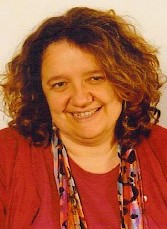
Speech by Douwe Visser at the opening of the Calvin Calligraphy exhibition

The following speech was given by Douwe Visser at the opening of the exhbition of Bridget Dommen's calligraphy of Calvin quotes, November 17th 2008.

When our communications secretary John Asling asked me last week to say in two sentences why the Theology Office of the World Alliance of Reformed Churches is doing an exhibition on Calvin, I had to think hard. Of course, it is obvious that the World Alliance of Reformed Churches has something with Calvin, especially in the Calvin09 year when the 500th anniversary of his birthday will be commemorated. No one can claim ownership of Calvin but as the largest global organisation in the tradition of John Calvin the World Alliance of Reformed Churches will most certainly be involved in this Calvin09 year. But still: why this exhibition?
Well, personally I see Calvin as my liberator. He made my Sunday life much happier. Let me explain. As a kid I grew up in a very orthodox reformed family in the Netherlands. Sunday life was going to church twice, in the morning and in the afternoon. No outdoor activities were allowed, except a short walk. I was a keen soccer player but to play that on Sunday was definitely not allowed. And oh how boring was that long, long day. The soccer ball in my room became so attractive. Yes my friend next door, he could play soccer on Sunday but he was Roman Catholic and my father used to say, that they could confess their sins and could continue after that as they liked. Well, I was prepared to confess all my sins if only I could go and play outside. But then on one of those Sundays the word of liberty came. Right from the pulpit in our church. It was during an afternoon service when our minister preached about the fourth commandment, about the Sabbath. He told the congregation in his sermon that we should not be too strict on Sunday because John Calvin himself in 16th century Geneva was now and then sailing in his boat on Sunday! This was a word for me. A word of salvation! The name John Calvin would be forever in my memory. And after the service I asked my mother whether she had listened well to the service. Of course she had. And oh how wonderful were the days when the word of the preacher still had great authority: the Sunday regime in our house became less strict. Thanks to John Calvin, sailing on the Geneva Lake.
Some time ago I had a visit in my office from one of the professors of the Theology faculty here in Geneva. I told him this anecdote. It was a risk because he could spoil my memory by explaining with his authority that John Calvin could never have sailed on the Geneva Lake and certainly not on Sunday. But as a great scholar he said: “This is new to me!”
But still: why this exhibition organised by the Theology Office of the World Alliance of Reformed Churches? I wrote to John Asling that this exhibition is on the words written by Calvin and that for theology today, at least theology from reformed perspective, Calvin’s words are still a source of inspi-ration. The artist of the exhibited works, Bridget Dommen, told me she was a bit amused by this state-ment. Because for the texts of the calligraphy and so for the calendar they had selected words from the more non-theological writings of Calvin. That may be so. You will not find words about Trinity. About Christology. About predestination. But is theology only limited to these topics? If we read for example this text, here shown: “It is nowhere forbidden to laugh or to eat one’s fill or gain new possessions or enjoy oneself with musical instruments or drink wine.” Is that not theology? Quoted even from one of Calvin’s most theological writings, the Institutes. If you read what comes right after that quotation you will find that Calvin warns against over consumption and greed but the words about enjoying life have been said and it is as if I hear Calvin saying: “It is nowhere forbidden to play soccer on Sunday.”
Of course Calvin’s words can today – as in the past – only be read with a critical sense. Within a cen-tury after Calvin died in the Netherlands a confession was written about predestination: the Canons of Dordt. These are words, one could say harsh words, about being ‘elected to salvation’ (for the happy few) or ‘being doomed to rejection’ (for the many). When I worked in Zambia I was elected to be part of a committee translating the Canons of Dordt in the language of the region – Cicewa – where my church, the Reformed Church in Zambia was active. What an election was that: I never felt so doomed before. Sometimes these Canons of Dordt are being regarded as the ultimate outcome of Calvin’s the-ology. However, you need theological research – if you are interested in – to be aware of the fact that there is no direct line from Calvin’s theology to the Canons of Dordt.
You also need theology to see that there is a direct line from Calvin’s theology to words which are now part of the basis of the World Alliance of Reformed Churches: the Accra Confession, a document about injustice in the world and the call for justice. You need theology, I said but look at words here at this exhibition so beautifully shown like this text: “One can recognise a just and well regulated government: it will do justice to the afflicted and needy.” As an isolated text it could just be seen as a political statement but one should read it in its context – a commentary on Psalm 82 – where Calvin speaks about being guilty before God, an awareness which could maybe have helped to prevent something like today’s credit crisis.
For the World Alliance of Reformed Churches the words of John Calvin are a source of inspiration even more than we sometimes recognise ourselves. For our theological journal Reformed World I asked contributions for the next issue on Reformed Identity. One of those I approached wrote me, that he is willing to contribute an article “even if I am not a huge fan of Calvinism”. Well we are open for critical points of view. But I can already say, after having received it, that this well written article is more close to Calvin’s theology than sometimes an article is, written by a huge fan of Calvinism.
So why this exhibition? All I have said so far has to be connected with what is as important as the con-tents of the texts: the beautiful calligraphy produced by Bridget Dommen. You don’t need to be a huge fan of Calvinism to appreciate the beauty of the works here shown. We are very grateful to Bridget for having these works of art as the centrepiece of this exhibition. They go together with posters and other material showing the work of the World Alliance of Reformed Churches. Because all this work goes together with sources of inspiration like the words of John Calvin. We want to show that in this tradition the World Alliance of Reformed Churches is a vital ecumenical and global organisation. I can only hope that words of John Calvin may continue to be words of liberation not only for young soccer play-ers but more so for a world in which God works with us to the fulfilment of his Kingdom.

Genève 17-11-2008
copyright (c) Douwe Visser and WARC

lundi 8 septembre 2008

Meditation on a positive view of scribes . Matthew 13.52 and Jeremiah 36

Matthew 13:52 and Jeremiah 36
And he said to them, "Therefore every scribe who has been trained for the kingdom of heaven is like a householder who brings out of his treasure what is new and what is old."

A meditation by the Rev. Theodore Gill, senior editor, WCC Communication

One verse in the 13th chapter of Matthew contains a complete parable,
a parable with the most positive view of “scribes”
to be found in the gospel according to Saint Matthew.
Elsewhere, in Matthew 23, we encounter the series of denunciations that begin,
“Woe to you, scribes and Pharisees, hypocrites!”

Yet, it turns out, there is such a thing as a scribe trained for the kingdom of heaven,
and many New Testament scholars believe that this is how the author/editor who stands behind our canon’s first gospel understood the role of gospel-writer or evangelist:
The person who is called to tell the story, and record it, must balance
the impact on the community of contemporary developments and trends – “what is new” – with history, the lessons of scripture and tradition – “what is old”.

In the time of Jesus the position of “scribe”
had evolved to one of scholarship and pedagogy,
centering on interpretation and practical application of Torah, the law of Moses.
Luke uses a different term to describe the office of scribe: “a doctor of the law”.

But the word had other connotations at other times –
following the return from exile in the days of Ezra and Nehemiah,
the scribe was an official of the royal court in Jerusalem.
Earlier still, a scribe – sofer in Hebrew – was simply someone who was literate,
capable of reading and writing, and therefore of copying texts or taking dictation.

In the 36th chapter of Jeremiah, we see that Baruch is something more than that,
more than an office clerk or administrative assistant to the prophet.
In fact, Baruch was Jeremiah’s communication secretary –
not merely writing up the details of the boss’s visions but publishing them abroad,
representing the prophet in public, taking much of the heat for Jeremiah’s positions.
And in Jeremiah 36, Baruch does appear in public repeatedly – until
sympathetic courtiers advise him to go into hiding, if he and Jeremiah have any sense.
One of these courtiers, Elishama, is described as ha-sofer, the king’s scribe.
Baruch and Elishama, two communication secretaries, representing different interests;
one warns the other to lay low, if he wishes to avoid prison or worse.
So there was honour among professional communicators, at least in this case.

Of course, Baruch would have been interested in audience reaction to his release,
although reader surveys were not terribly sophisticated in those days.
He heard a variety of people insisting that his scroll was fit for the king,
and he conveys to us later reports of just how the king received his work.
After each three or four columns of prophesy were read,
the king took a particular type of knife that was one of the scribe’s own tools,
cut off the latest strip from the scroll, and threw it into the fire.

Some officials there in the royal winter apartment dared to object to this sacrilege,
and Baruch preserves their names for posterity.
A loyal audience is worth remembering.

The book of Jeremiah assumes that there was a proper response expected
after the scroll had been produced and presented to the people and to the ruler.
I suppose that all communication secretaries harbour such expectations,
and may even worry that doom awaits all concerned
when the world and its leaders turn deaf ears to the message.

But our focus has been on one particular chapter in Jeremiah,
telling of events that happened well before the dire ending of Jehoiakim’s reign.
The end of this chapter is less apocalyptic, but no less world-transforming:
“Then Jeremiah took another scroll and gave it to his communication secretary,
Baruch son of Neriah, who wrote on it…all the words of the scroll
that the king had burned in the fire; and many similar words were added to them.”

So the scroll of prophecy was not lost;
the task of communication was undertaken once more,
no matter how unwelcome the message or the messengers.
Inevitably, accounts of the latest events, new prophetic visions
“and many similar words” were added to the flow of information:
For every scribe who has been trained for the kingdom of heaven is like
the master of a household who brings out of his treasure what is new and what is old.

Let us pray.

Living Word,
give us true vision,
bless us with the skills and talents we require,
grant us persistence,
so that we may serve your church
and the world may seek your kingdom;
through Jesus Christ our Lord.
Amen.

This meditation was given at the prayers which opened which opened the meeting of the press officers network of Euroepean churches - PONEC. The Meeting began in the Ecumenical Centre chapel and continued in the Cartigny Centre in the Genevan countrside.


copyright (c) Theodore Gill/WCC

dimanche 31 août 2008

500 word sermon for a wedding - As God turns water into wine, we learn to walk on water


The following sermon was preached in English and in French at the wonderful wedding in Dardagny of Nicolas and Susan - avec mes excuses aux lecteurs/lectrices francophones - la version française n'existe pas par écrit.

As God turns water into wine, we learn to walk on water


There’s an expression in French which I like: “la vie quotidienne” – somehow when you translate it into English it doesn’t have quite the same ring – “everyday life”

- in our everyday life we don’t expect miracles
- in our everyday life people don’t walk on water
- in everyday life water isn’t turned in to wine.

(Though I have to say that when people learn that I’m a pastor I often get remarks like “Oh good does that mean you can turn water into wine for us?”)

The water Jesus turns into wine was water for the everyday purpose of ritual purification. It is ordinary water – in those days it was ordinary to be religious not extraordinary – and it became miraculous, wonderful delicious wine.

Water is essential for life
Jesus takes this everyday essential element
And makes it more essential
As wine it speaks not only of thirst that is quenched
But of joy, of the deeper more profound things in life,
it speaks of covenant, of time, of maturity, of work and pain
and of love overcoming travail.

Nicolas and Susi
Perhaps you too do not expect miracles, even if this is not an everyday kind of day but an extraordinary one.
Yet in many ways a marriage is a miracle
- a miracle of love
- an everyday miracle.
Sometimes marriage really is like walking on water
At other times it may be like wading through muddy, turbulent stormy waters

But you have invited us to a miraculous place for your wedding
The vines in the vineyards all around us are not flowering like in the reading from the Song of Solomon but are already fruiting
All around us God’s good creation, tended by human hand, is turning water into wine.

As you make your covenant today
So God continues in covenant with you and with all of us
Turning the water of our everyday lives
Into the wine of deep commitment

This special, extraordinary day
which celebrates the everyday covenant of your marriage
speaks to us of eternity, of miracles
it helps us to commit ourselves once more to our everyday lives
helping us to walk on water
to swim against the tide
and to reconnect with the wondrous covenant of love and life.

There is a Jewish saying that a happy marriage is an even greater miracle than the parting of the red sea – not exactly walking on water but walking on liberating dry land between water.

Nicolas and Susan we wish you an extraordinary, ordinary life together,
We pray that it may be filled with the love, promise and support of God’s covenant.
All around us in our everyday lives God in Christ is turning water into wine
Encouraging you and all of us to
walk on water
dare to love
and drink that joyous wine which can speak to us of depth and eternity everyday of our lives.
We wish you an extraordinary, everyday life together.

Amen


copyright (c) Jane Stranz

lundi 11 août 2008

A poetic meditaiton on the "fanua" by Faautu Talapusi

The following poetic reflection was written by Faautu Talapusi and offered as part of morning worship on 11 August 2008. The word "fanua" means placenta and also land in Samoan and in Maori as well. You can find the full order of worship which this meditation was part of here.

Instead of a reflection, I would like to share with you a poem entitled – I am the fanua. I hope it expresses my personal reflections and thoughts on today’s readings.

I am the fanua
The placenta buried in my ancestral land after childbirth
I am the pute
The umbilical cord buried and my link to my fanua

I am the fanua
The land which holds my history, my life, my death
I am the fanua
The land of my people, my ancestors, my descendents

I am the fanua
That which bonds me to the air, the earth, the sea
I am the fanua
That which binds me to the plants, the animals, the fish

I am the fanua
My mother's pain and joy in giving life
I am the fanua
Mother earth's pain and joy in giving life

I am the fanua
God's beautiful and unparalleled creation
I am the fanua
God's undying and steadfast love

I am the fanua
Wailing in despair at my self-destruction
I am the fanua
Dying of a slow suicide

I am the fanua
Expecting God's revelation
I am the fanua
Believing in God's promise

I am the fanua
You are the fanua
We are the fanua.

copyright (c) Faautu Talapusi/WCC