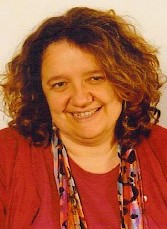
This worship outline was put together by Natalie Maxson who is in charge of the WCC Youth programme
Worship in the Ecumenical Centre - November 23, 2008
This week in the ecumenical prayer cycle we remember the peoples and churches of Burkina Faso, Chad, Mali, Mauritania and Niger
Welcome
Opening prayer
Lord, my God, You are great, fearful, glorious,
the Creator of every visible and spiritual creation,
You are faithful to your covenant and mercy, for those who love you and keep your commandments,
I thank you both now and forever for all the blessings, seen and unseen, that have been bestowed upon me.
Even up to this present time, I praise, glorify and magnify you,
for everything that has proven your rich mercy and compassion to be wondrous in me,
helping me, out of your goodness and love for humankind, from my mother’s womb
and providing in every way to protect and govern in a holy manner the matters of my life.
Amen
(Excerpt from a daily prayer to our Lord Jesus Christ, St. John Chrysostom, 4th century)
Song "Here I Am To Worship" by Tim Hughes
Psalm 100 from “the word on the street” by Rob Lacey
Matthew 25:31-4
31"When the Son of humankind comes in his glory, and all the angels with him, he will sit on his throne in heavenly glory. 32 All the nations will be gathered before him, and he will separate the people one from another as a shepherd separates the sheep from the goats. 33 He will put the sheep on his right and the goats on his left.
34"Then the King will say to those on his right, 'Come, you who are blessed by my Father; take your inheritance, the kingdom prepared for you since the creation of the world. 35 For I was hungry and you gave me something to eat, I was thirsty and you gave me something to drink, I was a stranger and you invited me in, 36 I needed clothes and you clothed me, I was sick and you looked after me, I was in prison and you came to visit me.'
37"Then the righteous will answer him, 'Lord, when did we see you hungry and feed you, or thirsty and give you something to drink? 38 When did we see you a stranger and invite you in, or needing clothes and clothe you? 39 When did we see you sick or in prison and go to visit you?'
40"The King will reply, 'I tell you the truth, whatever you did for one of the least of these brothers of mine, you did for me.'
41"Then he will say to those on his left, 'Depart from me, you who are cursed, into the eternal fire prepared for the devil and his angels. 42 For I was hungry and you gave me nothing to eat, I was thirsty and you gave me nothing to drink,
43 I was a stranger and you did not invite me in, I needed clothes and you did not clothe me, I was sick and in prison and you did not look after me.'
44"They also will answer, 'Lord, when did we see you hungry or thirsty or a stranger or needing clothes or sick or in prison, and did not help you?'
45"He will reply, 'I tell you the truth, whatever you did not do for one of the least of these, you did not do for me.'
46"Then they will go away to eternal punishment, but the righteous to eternal life."
Meditation (Christ the King—He pushes us in new directions)
The meditation was a stunning pas de deux on being pushed and pulled in the Spirit allowing us to reflect on what God is trying to encourage us to do.
Intercessory prayer (all together we read…)
God, we bless you for the gift of life that you grant us,
that strength of faith, so fragile and so powerful, which is nourished by the assurance of your love…♫
“The push, the pull of God’s creative spirit. The push, the pull of God” (X 2)
We pray to you, God, for the sustenance of life for the people of these five countries,
Mali, Niger, Chad, Burkina Faso and Mauritania.
Stir up the strength and courage of all those who are engaged in lifting these countries out of poverty.
Be with the Christians and Muslims to live together as neighbours in peace…♫
Almighty God, you push us with love to see Christ in others,
to feed the hungry, comfort the lonely,
care for the sick, welcome the stranger…♫
Loving God, You push us to go the extra mile when it's difficult to smile,
You push us, to be better versions of ourselves
and to see the other point of view
You push us when there's nothing else to do
You push us when we think we know it all, when we stumble and we fall…♫
Gentle God, You push us when we don't appreciate,
You push us not to lie and not to hate,
You push us, when all we want to do is cry,
You push us when it's hard for us to try…♫
Everything we do, Oh God, we owe it all to You
Every move we make, every step we take,
Everything we know, it's all because You push us.
Your patience, love and eternal wisdom
we give you thanks and praises God. Amen
Lord’s Prayer (said together in our own languages)
Song—“Make a Joyful Noise—Psalm 100” by Linnea Good
Blessing
May the blessing of God who pulls us back into love and compassion,
the blessing of Christ the King who boldly pushes us in new directions,
and the blessing of the Holy Spirit who guides us in all our days,
be with us all.
Amen.
lundi 24 novembre 2008
Worship with song, dance and rap for Christ the King
mercredi 20 août 2008
Summary of Women of Zimbabwe Arise (WOZA) report detailing trauma experienced by their members
WOZA counts the cost of their courage in a new report
Women of Zimbabwe Arise (WOZA) launched a report detailing the
trauma experiences of their members on Wednesday 19 August 2008.
The event was conducted in Johannesburg, South Africa with
attendance by press, diplomats, civic society leaders and members
of WOZA. The report is entitled “Counting the Cost of Courage:
Trauma Experiences of Women Human Rights Defenders in
Zimbabwe”.
In 2007 research was carried out to determine the nature and
extent of violations perpetrated on WOZA members by state actors.
It used a questionnaire administered verbally to more than 2,000
WOZA members. The major results were detailed in a report
released in March 2008 entitled ‘The Effects of Fighting
Repression with Love’. They showed a high level of arrests,
assaults, torture and cruel, inhuman and degrading treatment,
primarily by members of various sections of the Zimbabwe Republic
Police.
One section of the questionnaire sought to document traumatic
experiences of WOZA women in order to understand the basis of
possible psychological and emotional disorders arising from their
civic activism - ‘counting the cost of their courage’. The
report launched today outlines these findings.
The research
The research explored two broad categories of trauma: ●
“displacement” experiences - a concept first developed
first in relation to the psychological and emotional plight of
refugees fleeing war zones. It details events such as loss of
home, failing to access food and medical care, being lost, being
caught up in fighting and similar experiences.
● The second source of trauma is “organized violence and
torture” (OVT), including events of torture per se as well as
assaults, cruel inhuman and degrading treatment, and verbal
threats, insults and taunts.
The data relating to trauma was based on the Harvard Trauma
Questionnaire [HTQ]. It was altered slightly from previous uses
in Zimbabwe in order to include an historical element, so that
there might be a long-range understanding of the women’s
experience of trauma throughout their adult lives. Interviewees
were asked to indicate trauma events in two forms: those they
have experienced themselves, and those they witnessed being
experienced by others. They were asked to record these events for
three periods: pre-Independence, 1980-1999, and for each year
since 1999.
Conclusions
The findings of the report indicate that Zimbabwe is a
“complex emergency”: significant violence, severe economic
decline, and the destruction of social capital, which means
resembles a war. As is the case in most complex emergencies,
women and their families are generally the most common victims,
and Zimbabwe is no exception. Many women of all ages have been
brutalized, raped, tortured, and even killed for their political
activities and of those of their male family members. As children
are normally in the presence of their mothers, they been equally
victimised. Most often such victims demonstrate psychological
effects of their experience and witnessing of traumatic events.
Additional findings indicate that: ● Zimbabweans have a
history of mass trauma dating back to colonial experiences. The
members of WOZA have experienced trauma over all the past three
decades, as well as before Independence in 1980.
● The frequency of trauma of all kinds has been steadily
increasing. An average of 2.9 events per respondent for the
pre-Independence period doubled to 5.8 in the two
post-Independence decades, and then tripled to 16.7 in the period
2000 to 2007.
● There are generally more displacement experiences than OVT
however - indicative of the worsening socio-economic situation.
● It was found that 1,051 [53%] women in the sample had scores
indicative of psychological disorder.
● Trauma research suggests that repeated exposure to trauma
has a cumulative effect, making the victim more likely to suffer
from a psychological disorder. Zimbabwean women, with their
history of repeated trauma through recent history are then
candidates for clinical psychological symptoms resulting from
repeated trauma of various types.
● WOZA women have received very little counselling to help
them deal with their trauma. Some group healing sessions with
professional counsellors were organized, but remarkably, the
women seemed more concerned to discuss their ‘displacement’
issues than their experiences of OVT, which they said they
expected in any case and they had recovered from. Of course, this
does not mean that they do not have any trauma-related disorders,
but they themselves do not perceive them, and their observed
behaviour does not indicate them either. It is possible that the
psychological effects of their trauma may well be lessened due to
their understanding of the reason for their suffering and their
preparedness to make a sacrifice for the future of their families
and their nation.
WOZA Recommendations
What is clear is that the Zanu PF government seems to be
oblivious to the destructive impact of widespread use of violence
as a political tool of control and repression. Although it has
appeared to have achieved its immediate goal of stifling dissent
for some years, it has surely had seriously adverse long-term
effects on both the victims and the perpetrators.
It is also clear that any government has a responsibility to
care for the welfare of its people. At what point will a
Zimbabwean government confront the legacy of trauma and look to
begin a healing process? This must be an important consideration
in determining what form of authority emerges from the current
SADC mediation process.
In order to deal with the problem of the prevalence of OVT as a
common feature of our society, we recommend the following:
● Stop the political violence; disband militia camps in all
areas of the country. Any political violence must be reported,
investigated and prosecuted through the courts without any form
of favour or political influence.
● Intensive research should be undertaken into the effects of
OVT on Zimbabweans, both as victims and as perpetrators.
● A centre be established within Zimbabwe to carry out
research, training and treatment related to victims and
perpetrators of violence.
● A needs assessment be conducted regarding what treatment is
needed to heal both victims and perpetrators.
● Research should be conducted and disseminated on the most
effective ways for non-violent protestors to prepare themselves
to lessen the traumatic effects of torture and other forms of
violence.
● All government law enforcement agents be trained
specifically on their international responsibilities regarding
OVT and be required to make specific commitments not to follow
orders which require them to contravene this commitment; an
international rescue programme could be established to assist any
who lose employment as a result of adhering to this commitment.
● All members of the government, defence forces and party
institutions who are identified as perpetrators be required to
appear before a forum where they admit their crimes; the more
senior officers identified as giving orders should be
prosecuted.
● Joint sessions of victims and perpetrators should be held to
aid the healing process on both sides.
● Government should immediately lift the current ban on
organisations providing humanitarian assistance and also allow a
United Nations team to address the humanitarian crisis and
widespread hunger without political interference.
● A transitional authority should form a body to consult and
develop a transitional justice plan of action designed to bring
healing and reconciliation and then deal with justice and
restitution for victims in the new Zimbabwe.
The type of evil that has become an integral part of government
behaviour in Zimbabwe must be eradicated and the mindset of power
hunger and disrespect for other human beings overcome. It can
only happen through the actions of a government with a strong
will to correct wrongs and ensure that the rights of all
Zimbabweans be respected. We therefore believe that the most
appropriate government to replace the current illegitimate
incumbent would be a non-political transitional authority whose
members have as a priority transitional process of healing,
transforming and rebuilding. Such an authority will have the
capacity and neutrality necessary to dismantle the structures of
violence and oppression.
Nonetheless, whatever format the new political dispensation in
Zimbabwe takes, it will need to embark on an official programme
of acknowledgement of injustices. Economic recovery and
democratic reform, whilst imperative, can only go so far in
restoring the dignity of people. We believe that for dignity to
be fully restored a new administration needs to assist individual
survivors to rebuild their broken lives whilst ensuring that
‘liveable peace’ is achieved. It is the only way
Zimbabweans can bury the ghosts of their past and move forward
into a more secure future.
As well as outlining the findings on the research done on WOZA
members, the launch also outlined some statistics of
post-election violence since the 29 March harmonised elections,
giving a brief overview of the horror that many Zimbabweans have
been faced with in the last few months. These statistics added
further poignancy to the call for a lasting peaceful solution in
Zimbabwe and the urgent need for a national programme of
healing.
Ends
19th August 2008
A copy of the full report is available on request by email or
can be downloaded from the website at www.wozazimbabwe.org
<http://www.wozazimbabwe.org>. The statistics on the
post-election violence and individual case histories of survivors
are also available. For more information please contact either
Jenni Williams on +263 912 300 456 or +263 912 898 110, Magodonga
Mahlangu on +263 912 363 668 or Annie Sibanda on +263 912 898
112.
lundi 30 juin 2008
Sermonette on Tenemos Esperanza - holding on to hope by Jane Stranz
 Sermonette preached on Monday 30 June 2008 in the Ecumenical Centre Geneva
Praying through the ecumenical prayer cycle for Bolivia, Chile and Peru
Texts Psalm 69 and Mathew 10 24 -32
Picture by Andre Jordan from If You’re Happy and You know it
Don’t let go…
The Psalmist says:
More in number than the hairs of my head
are those who hate me without cause;
And Christ in the gospel teaches:
Are not two sparrows sold for a penny? Yet not one of them will fall to the ground unperceived by your Father. And even the hairs of your head are all counted. So do not be afraid; you are of more value than many sparrows.
Prosper Munatsi, who was here in the ecumenical centre last week, has not let go
He returned to Zimbabwe on Thursday last week where he continues to lead the Student Christian Movement – encouraging others also to hold onto hope.
It is not easy to hold on to hope
It’s such a fragile, vulnerable thing
You may think that your enemies are more numerous than the hairs on your head
This sense of being encircled may make you give up
Take you down to the pit of despair
But actually God will care for and uphold you,
And the Gospel promise is that this is an intimate care
which knows you are of vastly more value even than lowly sparrows
and which knows the number of hairs on our heads.
Prosper’s decision not to remain silent but simply to continue forwards in hope
spoke deeply to me over the past week of the spirituality of resistance we mention so often in many of our meetings.
His hope and the hope of so many others around the world is based on the firm conviction that each and every human being is precious, counted and cared for by a loving God.
It was this same hope and conviction that inspired Bishop Federico Pagura.
Even at the height of military dictatorship in Argentina he held on to hope and the belief in human dignity and a God who loves and cares for each of us with deep compassion
Although I don’t speak Spanish his wonderful hymn Tenemos esperanza speaks to me deeply of what a Christian spirituality of resistance should be
With its glorious tango rhythm full of energy, speed and also discipline
A pas de deux for and of the people
Deeply rooted in the values of the gospel,
rooted too in the current and future struggles of the people where they and we are now.
As we give thanks for the overcoming of the military dictatorships in so many Latin American countries
We recognize too that it took time, it was hard
– people disappeared and died and are grieved for to this day.
That time also speaks to us of resistance and of holding on to hope.
In Andre Jordan’s childish picture on our service sheets this morning
We can see how hope is fragile
If we let go it will blow away and be a distant memory up in the clouds
The image shows how hope needs to be held onto at ground level
Jordan knows about this in a profoundly personal way.
He draws to overcome, to some extent, very deep and repeated attacks of depression.
Hope needs to be rooted, held on to
in each of our many cultures,
and in our own lives
This is how a long distance spirituality of resistance can begin to take shape in our lives, in our churches, in our world.
Hold on to hope.
Tenemos Esperanza!
Copyright (c) WCC/Jane Stranz
vendredi 20 juin 2008
Ecumenical prayers for Paraguay, Uruguay and Argentina prepared by young ecumenists
Ecumenical Centre Prayers, Monday, June 23, 2008
This liturgy and prayers were put together by a group of young people working in the different ecumenical organisations in Geneva. During this week we will be praying for Paraguay, Urugauay and Argentina according to the ecumenical prayer cycle.
Welcome & Call to worship
Song, Cristo vive, fuera el Ilanto (Thuma Mina 281)
Prayer
God of all goodness,
You have been our refuge from generation to generation.
Your will is that peace should shine on all people everywhere.
With your spirit, guide the efforts of humankind
to bring peace and justice to the nations of the earth,
and give strength to rulers and all who work to establish peace and justice in the world.
Inspire those who come together in search of ways to bring about peace,
and through your word, change the hearts of all people so that we shall strive for:
Peace, and not war,
The Common Good, rather than individual wellbeing,
Your Justice, instead of our own glory.
You have given us your peace.
Enable us to share that peace with those around us,
so that love and harmony may be always present in our lives,
that all the world may know happiness,
that we may live with dignity as brothers and sisters,
and that all may rejoice in your presence.
United in diversity, we call upon your infinite grace,
humbly asking you to receive our prayer and make us instruments of your peace.
Amen.
Scripture readings
Psalm 69:13-18
13 But I pray to you, O LORD,
in the time of your favor; in your great love, O God,
answer me with your sure salvation.
14 Rescue me from the mire, do not let me sink deliver me from those who hate me, from the deep waters.
15 Do not let the floodwaters engulf me
or the depths swallow me up
or the pit close its mouth over me.
16 Answer me, O LORD, out of the goodness of your love;
in your great mercy turn to me.
17 Do not hide your face from your servant; answer me quickly, for I am in trouble.
18 Come near and rescue me; redeem me because of my enemies.
John 17:13-21
13"I am coming to you now, but I say these things while I am still in the world, so that they may have the full measure of my joy within them. 14 I have given them your word and the world has hated them, for they are not of the world any more than I am of the world. 15 My prayer is not that you take them out of the world but that you protect them from the evil one. 16 They are not of the world, even as I am not of it. 17 Sanctify them by the truth; your word is truth. 18 As you sent me into the world, I have sent them into the world. 19 For them I sanctify myself, that they too may be truly sanctified. 20"My prayer is not for them alone. I pray also for those who will believe in me through their message, 21that all of them may be one, Father, just as you are in me and I am in you. May they also be in us so that the world may believe that you have sent me.
Testimonies…
Intercessions (Song, La paz del Señor, Thuma Mina, 187)
As we pray this week in the ecumenical prayer cycle for the countries of Argentina, Paraguay and Uruguay, we lift up in our hearts dear God…
The families and friends of those who were murdered or disappeared in Argentina and Uruguay including the mothers of the plaza de Mayo who through their resistance bring hope for justice and healing.
We pray for Guidance to those in the government of Paraguay as they work to remove corruption and bring justice to those who have abused power.
We pray that you may guide the people of Uruguay towards peaceful and democratic elections in 2009,
Dear God we pray for those who experience poverty and struggle for daily bread, who live without security, safety and shelter.
And for those who must live far from their families and home in order to make a living and provide for their families,
La paz del Señor, la paz del Señor,
la paz del Resucitado,
se hace presente a hora ya quí
apréstate recibirla.
We give thanks for the leadership and service to the churches of the people from these countries including former WCC general secretary, Emilio Castro. We thank you for the courageous church people who have worked and stood up for justice.
We thank you for the radiant nature of this region and that your creation continues to give life and beauty. Teach us to take care of your creation responsibly.
Oh God, You who are always with us, who will never quit us … teach us your peace and how to share it,
La paz del Señor, la paz del Señor,
la paz del Resucitado,
no puede vivir encerrada en si,
apréstate compartirla
Lord’s Prayer (said together each in our own language)
Blessing
Que la bendición del Dios de paz y justicia esté con nosotros
Que la bendición del Hijo que llora las lágrimas del mundo sufriente esté con nosotros
Y que la bendición del Espíritu que nos inspira la reconciliación y la esperanza esté con nosotros, ahora y siempre.
Amen
Closing Song, Seigneur, rassemble-nous (Agape, p.148 )
Verses 1- 3, 6,7 in English
vendredi 25 avril 2008
Liturgy for the World Day of Prayer for Zimbabwe
Ecumenical Centre Chapel Monday April 28th 2008
Day of Prayer for Zimbabwe
A service asking for justice, peace and healing in Zimbabwe
Organised by the WSCF and the World YWCA
Call to prayer
We gather to remember and accompany the people of Zimbabwe, in the name of the blessed Trinity, one God, now and forever.
Amen
O Lord, open my eyes,
that I may see the need of others,
open my ears that I may hear their cries,
open my heart so that they need not be without succour.
Let me not be afraid to defend the weak because of the anger of the strong,
nor afraid to defend the poor,because of the anger of the rich.
Show me where love and hope and faith are needed,
and use me to bring them to these places.
Open my eyes and ears that I may, this coming day,
be able to do some work of peace for you.
Song: Uyai, O vanhu ve se, u yai kuna Mambo Jesu (Come all you people, come to our Lord Jesus)
Confession of sins
God of liberation and justice,
Defender of the poor and marginalized,
we seek your guidance.
Give us the vision and confidence to become prophets when resources are looted.
Let us hear the cry of the widows.
Let us feed the orphans.
Let us denounce injustice by the powerful.
May we demand drugs for the sick.
May we demand care for the abandoned.
May we denounce wastefulness by the affluent.
Forgive our silence.
Forgive our complicity.
In your mercy, forgive our condemnation of people living with HIV.
Forgive us when we deal lightly with the wounds of your people.
Forgive the times when we have offered artificial solutions.
Empower us to tackle corrupt systems,
Make us instruments of your peace.
Make us agents of transformation.
In Jesus’ name we pray.
Amen
Reassurance of pardon
Is not this the fast that I choose: to loose the bonds of wickedness, to undo the thongs of the yoke, to let the oppressed go free, and to break every yoke?
Then shall your light break forth like the dawn, and your healing shall spring up speedily;
(Isaiah 58)
Almighty God who pardons all who truly repent, forgive your sins, strengthen you by the Holy Spirit, and keep you in life eternal; through Jesus Christ our redeemer.
Amen
Old Testament Reading: Psalm 85
Song: Verses I and 2 of Rakanaka Vhangeri
(Come and hear now the gospel, hear the good news)
Gospel reading: John 14:15-21
Song: Verse 3 of Rakana Vhangeri
Testimony
Intercessions
Sung response: Kunda Kwenyu Nga ku it we. (Your will be done Your will be done O Lord)
We pray for the political situation in Zimbabwe that it may be resolved quickly and peacefully.
We pray that whatever announcement is made in the near future, peace will be restored to the land.
All sing: Kunda Kwenyu Nga ku it we
We pray that calm leadership will prevail, not leadership fuelled by half-truths and propaganda.
We pray that intimidation and violence will cease.
All sing: Kunda Kwenyu Nga ku it we
We pray that in the face of intimidation and violence people will remain firm in the truth of their convictions and will continue to vote their real desires should there be a runoff.
We pray that if there is a runoff, that it will be done in fairness and peace, with international observers who will truly validate the results.
All sing: Kunda Kwenyu Nga ku it we
We pray that the person of God's choice will be brought into the position of authority.
We pray that the church in Zimbabwe
will remain faithful to minister the Gospel in an uncertain atmosphere.
All sing: Kunda Kwenyu Nga ku it we
We pray for wisdom for retaining security and safety for women,
children and men in Zimbabwe.
We pray for the young people used by politicians,
that they may stand up and refused to be used.
All sing: Kunda Kwenyu Nga ku it we
We pray for courage and strength for the people of Zimbabwe
as they face their current challenges.
We pray that the needed change must surely come through God’s own way.
All sing: Kunda Kwenyu Nga ku it we
The Lord’s prayer - said by each in their own language
Hopes for Zimbabwe
We take a moment to write words of hope and courage for Zimbabwean people.
Song: Tenzi werumu komirai nesu zvi no.
(Christ of the resurrection stand by us now, so that at this moment we are made holy by you).
We carry our words to the Zimbabwean cross in the foyer.
Prayer at the cross
The cross is the way of the lost
The cross is the staff of the lame.
The cross is the guide of the blind
The cross is the strength of the weak.
The cross of the hope of the hopeless
The cross is the freedom of the slaves.
The cross is the water of the seeds
The cross is the consolation of the bonded labourers.
The cross is the source of those who seek water
The cross is the cloth of the naked.
The cross is the healing of the broken
The cross is the peace of the church.
We place our words of courage and hope for the people of Zimbabwe at the foot of the cross.
Blessing
Now go out into the world to sow seeds of peace with justice,
And may:
The God of overflowing creative energy
The Jesus of vast compassion
The Holy Spirit who turns chaos to life enhancing wholesomeness
Be with you as you go.
Amen.
Sources
Call to Prayer pp. 148-49 Shona prayer,“The Prayers of African Religion
Uyai, O vanhu ve se p 113 WCC sixth assembly worship book
Confession of sins Dr. Ezra Chitando
Reassurance of Pardon p 38 A New Zealand Prayer Book
Rakana Vhabngeri No 76 Agape
Kunda Kwenyu p 67 Worshipping Ecumenically
Intercessions YWCA
Tenzi werumu P 124 WCC sixth assembly worship book
Prayer at the cross Tenth century African hymn
Blessing YWCA
vendredi 18 janvier 2008
Information about the Kopenang Community Trust
The following document is further information written by Dominican sister Sheila Flynn about the KOPANANG COMMUNITY TRUST.
Do visit the Trust's website to learn more about their work. www.kopanang.org
April and May, 2001, saw the inception of the Kopanang Women’s Group – women choosing to walk a courageous journey of learning and training, implementing their own transformation in the process. If the journey of a thousand miles begins with one step (Lao Tse), then these women have surely traversed continents in the pursuit of their own self-discovery and self-worth. A not insignificant step, given the legacy they are heir to. Rev. Margot Campbell Gross from the Unitarian Universalist Church in San Francisco was an integral part of our humble beginnings.
Kopanang members comprise women from two historically divided communities – the African township of Tsakane (population approximately 72,000), and the so-called coloured township of Geluksdal (population approximately 7,000), and come from diverse religious backgrounds, but all Christian – though we would be open to non-Christian women. We were told that it had been tried many times, bringing these two groups ethnic groups together, and it had failed. We were not daunted. We are proof that it can work.
These two townships are set within the barren and unyielding landscape of the Far East Rand, about 55km from the centre of Johannesburg. They were set up to provide the labour force for the mines and factories in the area, both of which have subsequently closed down, escalating the poverty and unemployment endemic in the area (around 80%), and the pandemic impact of HIV/AIDS on the communities. We now have the specter of an untreatable TB strain worsening conditions and accelerating death. Weddings as a cause for gatherings, have given way to funerals.
Kopanang is on the site of the Sithand’izingane Care Project, a community-driven initiative made up of volunteers caring and serving in a variety of ways: a drop-in day-care centre for HIV affected and vulnerable children (35) up to six years of age; an after-school care programme for 55 orphans; an organic food garden training programme; crisis food distribution to 150 families; a counseling centre; a feeding scheme for 400 orphans in the township schools five times a week. Kopanang is the income generating wing for the mothers and grannies of the area. Kopanang means, gathering together. Sithand’izingane is a Zulu word meaning, “we love the children”.
Kopanang is about more than putting food on the table. Our work is about relationships. It is about wonder and creativity in the midst of struggle and poverty, the sharing of stories, faith and differing cultural identities, building understanding between each other. Lack of human rights or values, within a context of voicelessness, depression and lethargy, unemployment and diminishment are countered by human resource development and support.
The embroidery section (60 members are now highly skilled) produce high quality, vibrantly-coloured embroidered products such as wall hangings, waistcoats, cushion covers, bags, skirts, aprons, caftans and church stoles. Members teach new members in a cycle of empowerment, with ever widening circles. They have now also provided facilitated training to six other projects, two in the Free State (Kroonstad and Welkom), one in Mpumalanga (KwaNdebele) and three in Gauteng (Devon, Etwe-Twe and some leadership support to a project in Ivory Park). We have already undertaken in March 2006 a training programme for 25 HIV+ adolescents and 27 grannies at the Mildmay International Centre in Uganda, and provide ongoing marketing support for our sisters in the Vukani Poverty Alleviation project in Mpumalang. We are now looking to extend training opportunities to women in Ivory Park township, and Hlabisa in KZN. Truly, Kopanang is extending its borders.
Less than six years ago these pioneer women did not believe in themselves, nor did they expect too much from life, just the merest scrapings to feed their children if they were lucky, often at the neglect of themselves. Not a lot to beg for from life. Now, through their endeavours and own experience of transformation, they believe in both themselves and in a better life. They are shaping it. The group has fluctuating members – often due to sickness, sometimes death.
One of Kopanang’s primary objectives is to provide loving support to those infected and affected by HIV/AIDS, and to this end each member contributes in some way to dealing with this issue either in her family, or close neighbourhood. Each year we have a dedicated HIV/AIDS educational workshop. We also have yearly workshops on communication (to develop relationships and continue working on conflict resolution, etc.) and leadership workshops.
It is not an easy road. Development is fraught with frustration and setbacks. The grind to get beyond the concept of entitlement which is corrosive to the spirit and culture of individualism, so closely aligned to the negative spirit, or to develop the structures of a sustainable future in the project, are experiences which need to be met head on. Also the experience of lethargy and depression breed hopelessness. They have been used to only living in the moment and often very dark one. The sheer hard work and commitment it takes to move beyond the boundaries of endemic despair or the experience of worthlessness common to township life, is daunting. Yet Kopanang women are determined to shape the future of their lives and their families.
Kopanang products now find a home in the United States, Germany, Ireland, England, Holland, Belgium and Australia. In November, 2002, two members traveled to San Francisco to install an incredible body of work measuring over 35 metres long, depicting the story of the Universe and evolution (Universe Canticle), exhibited in Johannesburg at the MTN Head Office before leaving the country. The Faithful Fools organisation who commissioned this work were taken away by the splendour of the work, far exceeding their expectations, considering themselves guardians of the work. This series is now available for any organisation to borrow for exhibition and educational purposes – it is an educational tool in itself – and has traveled to five States in America, including Atlanta for a two-month long exhibition at the VSA Gallery in 2004, North Carolina and Minneapolis in 2005, and among others is another tour to Detroit at the end of 2006. We have provided 15 large wall hangings for Oprah Winfrey’s new school for girls in Johannesburg. Such is the ripple effect of a small group who through their creativity, defy boundaries and despair.
We have extended the diversity of our product range and a dedicated group within the membership are now creating exquisite African quilted products. We have also introduced bead training and members are now creating beautiful beaded jewelry and homeware. Our embroidery group have had commissions to create Church cloths and banners in Australia, major wall hangings for corporate institutions (e.g. Johnson & Johnson, New Brunswick, NJ) as well as a banner for the Catholic Theological Society of America’s 60th anniversary conference. Kopanang members have also created a magnificent banner commissioned by the University of South Africa, for their African Spirituality Conference which was held in January 2006, attended by many African countries. We are glad to have at least one of Kopanang’s beautiful embroidered panels residing in South Africa itself.
In 2004 our Kopanang women created eight banners (3 metres x 1 meter each) on World Religions for the First Universalist Church in San Francisco. These larger commissions provide not only support for our members but a huge challenge, broadening their own development and knowledge base. Most of our members have not had the opportunity to complete their education, often as a result of poverty. This kind of learning extends their value in themselves and their worldview. Most recently members created a “Dikeledi Cloth” from a Kopanang circle of love, breaking open the story of their lives and suffering and creating a patchwork cloth to visualize this experience.
At our Kopanang Children’s art class facilitated by one of our mothers, Nancy, our children completed and sent off a body of work, including a portfolio of prints, to the Paint Pals International Exhibition at the Museum of Children’s Art in Athens, for the duration of the last Olympics, and its director, Linden Longino has now invited our youngsters to participate in the China Olympics. In July 2007 a new body of work was exhibited at Parliament in Sydney as part of an international exhibition, winning its international award.
We are truly proud to have been able to open a forth unit, our screen-printing section. New members are being initiated into this new creative artform. A newly acquired etching press will provide opportunities to develop printmaking. We print onto material as well as do occasional runs of cards, e.g. Christmas, or Seasonal Greetings. We will be expanding this unit in 2008.
Ours is a unique opportunity to be a prophetic voice to the unheard millions who live their lives less than they are able, simply because of the “accident” of birth or race, compounded by the awful prevalence of HIV/AIDS. We believe our project is strong because of its multi-dimensional, relational faith approach and community ethos. Even if our contribution is but a drop in the ocean of need in these two townships, drops eventually create lakes, rivers and oceans.
Together, Kopanang and Sithand’izingane Care Project members are restoring hope and beauty in a future which has now become welcoming instead of threatening. We expect a lot from each other. We are confident that we shall receive what we hope for, knowing that our God has placed these dreams into our hearts. For that reason alone, we know that they will come to fruition.
We are so grateful for your life-giving support. May God bless you.
Sister Sheila Flynn
Vice-Chair and Coordinator for Kopanang Community Trust
sheilaflynn@mweb.co.za
Registration No: 5144/2006 NPO No: 056-245
P O Box 10268, Geluksdal 1546, South Africa
Phone/Fax: 27 11 738 9306
Project email: kopanangwg@mweb.co.za
Visit our web page:
www.kopanang.org